(401) 273-9419
sclt@southsideclt.org

Cranston

Construction Underway: SCLT’s New Food Hub Takes Major Step Forward


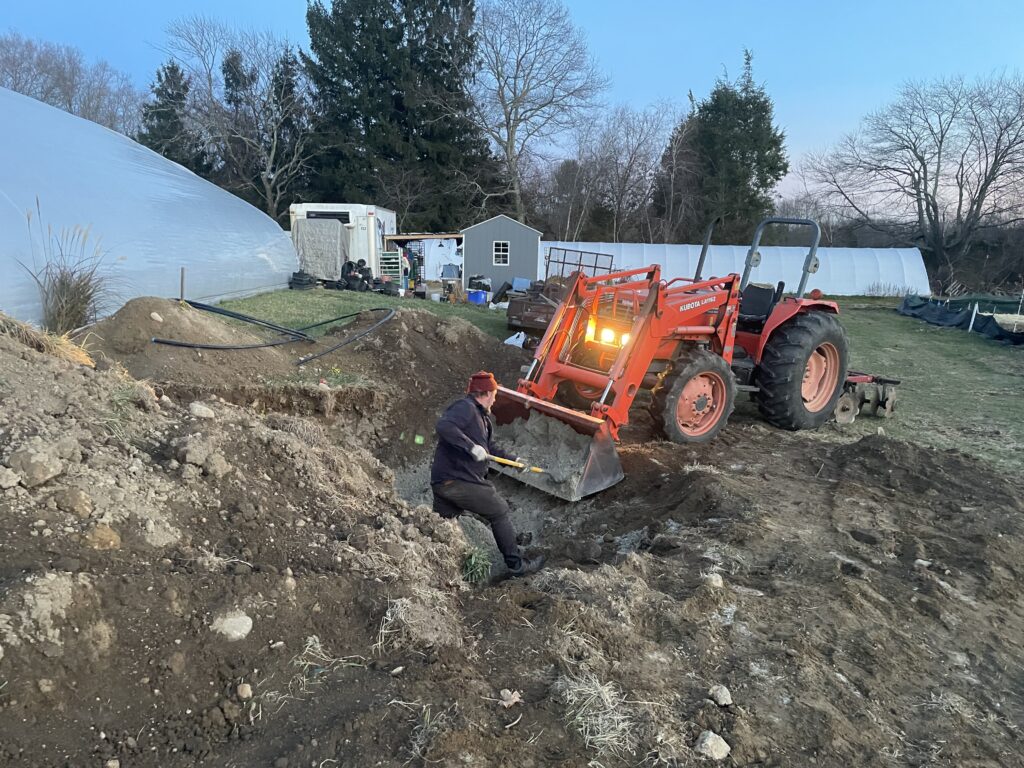
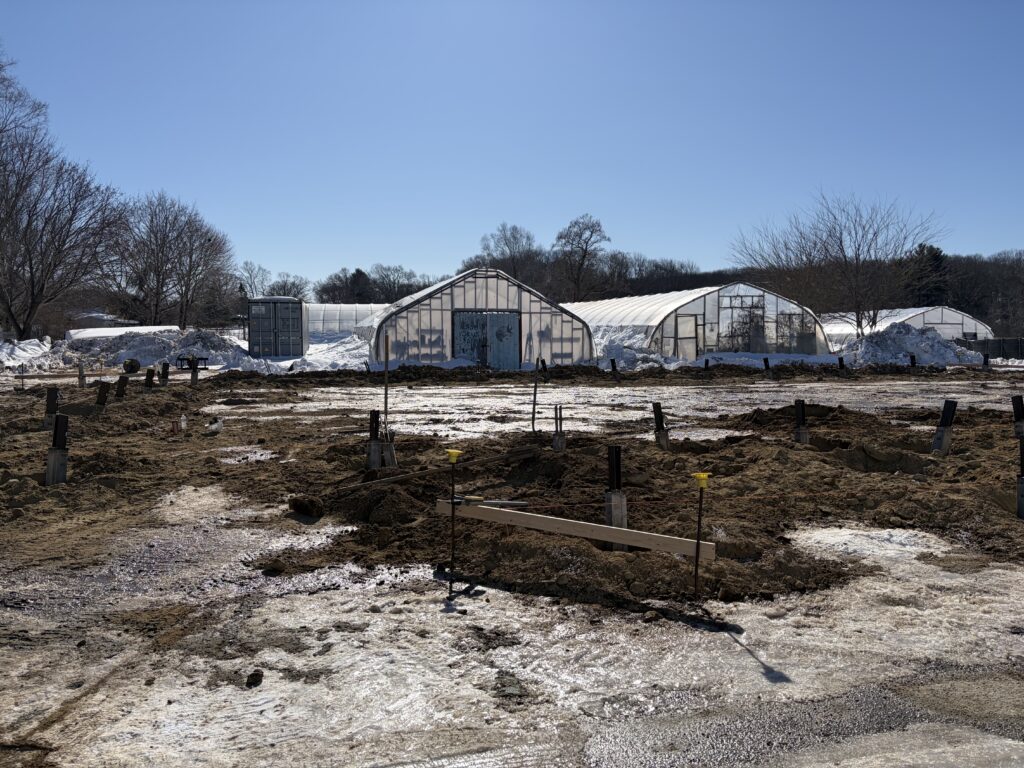
Construction of SCLT’s second food hub officially begins this week at Urban Edge Farm in Cranston. It’s a moment two years in the making and a testament to persistence through extended federal review processes and multiple rounds of revision. Now, after months of careful planning and coordination with experienced professionals, the vision is becoming concrete. Literally.

The journey began in January 2024 when SCLT submitted our application to the USDA’s Resilient Food Systems Infrastructure program. We waited. We revised. We adapted to changing federal guidance. And in March 2025, we received the official grant award letter. We were awarded the largest RFSI grant in New England and one of only four awards across the state of Rhode Island.

Since then, a dedicated team has been working to bring this to life. Project Director Matt Tracy, along with Ben Torpey, Dan Roberts, Kakeena Castro, Margaret DeVos, Isabelle Izobankiza, and Sam Shepherd, plus invaluable input from the broader team, have navigated permitting, site design, and contractor coordination.

Here’s the story: Our Produce Aggregation Program has exploded. In 2021, farmers in our network generated $49,000 in revenues. By 2025, that number reached $140,000. That growth reflects the quality of the produce and the deep demand in our community for fresh, culturally familiar food. It also means we’ve hit a wall. Our Farm-to-Market Center in Providence has reached capacity. We can’t process, store, or distribute more than we already are from that location. Building a new hub in Cranston, where most of SCLT’s produce is actually grown, is the next step. Over 20 farm operations at Urban Edge Farm sell produce through our aggregation program. More than 100 additional farmers work at nearby properties: Good Earth Farm, Hmong Community Farm, Snake Den Farm, Bami Farm, and independent producers increasingly contributing to our network.

The deeper challenge is Rhode Island’s agricultural reality. Our state has the highest agricultural real estate costs in the nation, six times the national average. For beginning farmers, especially those from historically marginalized communities, acquiring land and building infrastructure feels impossible. On our managed lands at Urban Edge and Good Earth, more than 75% of farmers identify as Black, Indigenous, or people of color. Two-thirds are women. Half live in South Providence. Many are immigrants and refugees from Southeast Asia, Africa, and the Dominican Republic who bring invaluable agricultural knowledge but face systemic barriers to land, markets, and infrastructure.

The new food hub addresses these barriers directly. By investing in modern produce aggregation, storage, and distribution infrastructure, we’re helping farmers increase production, improve product quality, and access new markets while improving food safety. This isn’t just about moving more vegetables. It’s about enabling farmers to build sustainable operations and claim economic power in a system designed to exclude them.

The facility itself, funded primarily through the USDA grant, will include modern indoor pack lines for sorting and processing, three walk-in coolers, a walk-in freezer, and a refrigerated delivery van connecting the new hub to our Farm-to-Market Center in Providence.

But this packhouse is just Phase 1. We’re thinking bigger. Over the next five years, we hope to transform Urban Edge Farm with a suite of improvements: upgraded water and sewer systems, HVAC, restrooms, electrical upgrades, drainage improvements, and road work.

This winter, we received a significant boost toward these aspirational goals. The Growing Justice Fund, a national funder supporting food justice work led by organizations centered on racial equity, awarded SCLT a grant to support the buildout of the food hub. It places us within a network of organizations across the country operating from the same conviction: food justice requires centering the voices, leadership, and ownership of communities most impacted by food system inequities. We’re also pursuing additional funding from NRCS and private donors to make these longer-term improvements real. Some will happen. Some may face regulatory barriers. Some may need to be reimagined. That’s the work ahead.

None of this happens alone. Building Futures Rhode Island has been instrumental in site improvements at Urban Edge and Good Earth Farms, and will continue supporting the new hub’s interior buildout. The Rhode Island Department of Environmental Management (RIDEM) has been a steadfast partner in this ongoing improvements project since 2002, when SCLT secured a long-term lease at Urban Edge Farm. That partnership reflects something deeper: RIDEM’s Division of Agriculture recognizes that supporting community-based food production is core to the state’s agricultural future. We’re honored to work alongside them.

Construction will be ongoing through 2026, with full facility operations commencing in 2027. We’ll see the steel structure rise by April, foundation and utility work through May and June, interior buildout over the summer, and equipment installation in the fall. Throughout this process, we’ll work closely with our farming partners to ensure a smooth transition, offering training on new equipment and best management practices.

This hub is being built not just for farmers, but with them. Our vision is to move toward greater farmer governance and decision-making as the hub matures, building something that farmers lead and own, not something imposed upon them.

The hub will serve approximately 150 local and regional agricultural producers, including farmers at Urban Edge and Good Earth, more than 30 from the Hmong United Association of Rhode Island land access project, and partner farms across the region. It will be cooperatively utilized and governed, designed to strengthen the broader farming community.

This facility represents an investment in the middle of our food supply chain, the infrastructure gap that has constrained what’s possible for small, historically excluded farmers. As we lay the groundwork this week, we’re grateful for the farmers, partners, funders, and community members who’ve helped bring us to this pivotal moment.

Stay tuned for more updates on this exciting project!
Read more

Breaking Ground on Food System Resilience: SCLT’s Cranston Food Hub Takes Shape

After months of planning and preparation, Southside Community Land Trust has officially broken ground on the Cranston Food Hub at Urban Edge Farm, a transformational project that will strengthen Rhode Island’s local food system from the ground up. This $1.7 million facility represents a crucial investment in the middle of our food supply chain, addressing critical infrastructure gaps that have long limited the growth potential of small-scale, historically underserved farmers in the Providence Metro Area.

The 4,000 square foot facility will serve as a comprehensive post-harvest handling, storage, processing, and distribution hub, dramatically expanding capacity for the 155 direct beneficiaries including SCLT farmers, partner organizations, and other regional producers. The hub will feature modern pack lines for washing and processing, three walk-in humidity-controlled coolers totaling 4,800 cubic feet, and a walk-in freezer – infrastructure that will allow farmers to handle significantly larger volumes while maintaining the highest food safety standards.

This project comes at a critical time for Rhode Island’s agricultural community. With the state having the highest agricultural real estate values in the nation, small farmers face enormous pressure to maximize productivity on limited land. Currently, 72% of Rhode Island farms occupy fewer than 50 acres, and 61% generate less than $10,000 in annual revenue. The new food hub in Cranston will help level the playing field by providing shared infrastructure that individual small farms could never afford on their own.

The impact extends far beyond farm economics. In the communities SCLT serves, up to 60% of families live below the federal poverty level, and food insecurity affects 29% of households statewide, rising to nearly 50% among Black and Latino families. The hub will significantly boost SCLT’s Produce Aggregation Program, which has seen remarkable growth from $3,500 in farmer revenues in 2017 to $190,000 in 2023. This facility will ensure that fresh, culturally familiar produce from local farms can reach thousands more Rhode Islanders, including through SCLT’s innovative VeggieRx program that partners with healthcare providers to prescribe fresh produce to food-insecure patients.

The collaborative nature of this project reflects its broad community impact. Partner organizations including Farm Fresh Rhode Island, Hope & Main, the Hmong United Association of Rhode Island, and numerous individual farms will utilize the facility, creating new market opportunities and strengthening connections throughout the local food network.

Looking ahead, this investment in climate-smart infrastructure positions Rhode Island’s food system for long-term resilience. The facility’s 20-year lifespan means it can evolve alongside changing agricultural needs while supporting SCLT’s expanding farmer training programs and land access initiatives. As extreme weather events and supply chain disruptions continue to threaten food security nationwide, projects like this food hub demonstrate how strategic investments in local infrastructure can create lasting solutions that benefit farmers, consumers, and communities alike.

With construction beginning soon and the facility expected to be operational by summer 2027, the food hub represents more than just a building. It’s a foundation for a more equitable, resilient, and thriving local food system that will serve Rhode Island for generations to come.

Read more

SCLT farmer strengthens operations with Brighter Future Fund grant

Kia Yang on a sunny day at her Good Earth Farm plot, pre-shed.

Kia Yang, a Hmong refugee farmer at SCLT’s Good Earth Farm in Hope, Rhode Island, was recently awarded a grant through the American Farmland Trust’s Brighter Future Fund to construct a tool and storage shed on her farm. The grant, which provides up to $5,000 to BIPOC, LGBTQ+, and women farmers nationwide, aims to strengthen farm resilience, enhance viability, and improve land access for traditionally underserved farming communities.

Yang’s farming journey spans continents and decades, beginning in Laos where her family operated a large farm producing rice, vegetables, and poultry. After moving to the United States in 1976, she quickly put down roots in Rhode Island’s agricultural community, starting with a community garden near her South Providence home. Four years ago, she expanded her operation to Good Earth Farm, where she now tends to a productive one-acre plot alongside other refugee farmers from Hmong and East African communities.

“I love it. I don’t want to stay home,” says Yang, who visits her farm daily to cultivate an impressive variety of crops including corn, bitterball, squash, peppers, scallions, celery, sweet potatoes, and cassava. Her produce reaches the community through multiple channels – the Broad Street Farmers Market, Sankofa World Market, and SCLT’s aggregation program, which distributes fresh vegetables to 14 hunger-relief agencies and operates produce prescription partnership program with the largest healthcare providers in Providence.

The new 10’x10′ shed will provide secure onsite storage for Yang’s farming equipment, fertilizer, drip tape, and other essential supplies. Currently, Yang stores her tools and supplies in multiple locations across Good Earth Farm’s 20-acre property, including a hoop house and greenhouse far from her field. This scattered storage situation requires significant time and energy that could be better spent on crucial farming tasks like planting, watering, weeding, and harvesting. The new shed’s proximity to her field will dramatically improve her daily operations.

The timing of this grant is particularly meaningful as Yang, who works with a part-time apprentice, recently renewed her lease for another five years at Good Earth Farm. The property has undergone significant infrastructure improvements since its acquisition by SCLT in July 2021, including major upgrades to its wastewater and irrigation pipeline systems. These improvements, combined with Yang’s new storage shed, will enhance both environmental sustainability and agricultural productivity at the farm.

Yang’s dedication to agricultural education is evident in her role as a mentor, having hosted apprentice Jairson Ascençao during the 2024 growing season, and again in the upcoming year. Her commitment to farming and community service, spanning over four decades in the United States, exemplifies how targeted support for individual farmers contributes to building a more resilient and equitable local food system in Rhode Island.

Read more

Infrastructure improvements at SCLT’s The Good Earth Farm

Land Access Manager Matt Tracy prepares the site for irrigation and wastewater improvements.

Southside Community Land Trust has recently completed significant improvements to wastewater and irrigation pipeline infrastructure at Good Earth Farm. Part of a long-term vision of integrated improvements, the pipeline project enhances environmental sustainability and agricultural productivity while enabling expansion of on-site retail operations. Stormwater management and irrigation system upgrades are expected to create improved conditions for the eight small-scale farm operations who grow culturally familiar produce to sell at several area farmers markets. It’s also allowed Sanctuary Herbs of Providence to establish processing and retail operations at the historic 20-acre property.

The improvements were implemented through a partnership with Rhode Island’s Natural Resources Conservation Services and were managed by SCLT staff, including Land Access Manager Matt Tracy, Properties & Facilities Coordinator Dan Roberts, and Conservation Associate Dave Kuma.

Sanctuary Herbs’ retail shop now open at Good Earth Farm, featuring teas, houseplants, culinary herbs, and more.

Sanctuary Herbs, which sources most of its ingredients from a 5-mile radius of the shop, has established a significant presence at Good Earth Farm, offering herbal teas, culinary seasonings, and other botanical products. The company will host its second “Open Doors” event on January 19, 2025 at 1800 Scituate Ave in Hope, RI, from noon to 3 PM, inviting the community to enjoy tea tastings, farm tours, and connection with local farmers. The free event showcases how infrastructure improvements have enabled Good Earth Farm to evolve beyond traditional farming into a hub for agricultural innovation and community engagement. Stay tuned to more news and events on the Sanctuary Herbs instagram page.

Conservation Associate Dave Kuma supervises digging and site preparation.

Good Earth Farm, acquired by SCLT in July 2021, continues its legacy as a vital resource for local agriculture while expanding its offerings. The property features three heated greenhouses, two high tunnels, and a retail operation serving both farmers and the public. The recent improvements in water management and facilities have created opportunities for diverse agricultural enterprises, from immigrant-led farming operations to herbal product manufacturing, demonstrating SCLT’s commitment to building a more resilient and diverse local food system.

The infrastructure improvements and expansion of retail operations align with SCLT’s broader vision for creating sustainable, equitable food systems in Rhode Island. With these enhancements now in place, Good Earth Farm stands as a model for how agricultural properties can support both traditional farming and value-added enterprises while maintaining strong environmental stewardship practices, and looks forward to evolving infrastructure projects as climate change drives that need.

Read more

SCLT Featured in Rhode Island Spotlight


This January, Rhode Island PBS will air a 10-minute video documentary on Southside Community Land Trust’s four-decade journey of transforming urban spaces into productive agricultural sites across Providence and supporting statewide food access efforts. The documentary, produced by Jim Hummel of Rhode Island Spotlight, chronicles SCLT’s expansion from its 1981 beginnings with two community gardens to its current network of 60 farms and gardens serving over 1,600 community gardeners and their families annually.

Featured in a writeup in The Providence Journal as well as upcoming PBS broadcasts, the piece explores SCLT’s comprehensive approach to food security through innovative programs like VeggieRx: healthcare partnerships providing veggie prescriptions for food insecure patients. The documentary includes interviews with longtime SCLT staff member Rich Pederson, who discusses City Farm’s role as a demonstration site growing 80 varieties of vegetables, and Charlotte Uwimphuhwe, who operates a successful farming enterprise at Urban Edge Farm in Cranston.

The Rhode Island Spotlight documentary will premiere on Rhode Island PBS on January 11th at 9:47 PM, with additional airings throughout the following week. For more information about SCLT’s work and impact, viewers can read the complete feature article in The Providence Journal or visit RhodeIslandSpotlight.org.

Catch the video on RIPBS:

  • Sat 01/11/2025 at 9:47 PM
  • Sun 01/12/2025 at 2:52 AM
  • Mon 01/13/2025 at 3:16 AM
  • Mon 01/13/2025 at 3:43 PM
  • Tue 01/14/2025 at 4:51 PM
  • Tue 01/14/2025 at 10:46 PM
  • Wed 01/15/2025 at 03:52 AM
  • Thu 01/16/2025 at 4:16 PM
  • Fri 01/17/2025 at 4:46 PM
  • Fri 01/17/2025 at 12:44 PM
  • Fri 01/17/2025 at 10:46 PM
  • Sat 01/18/2025 at 7:44 PM
Read more

SCLT Announces Exciting 2024 Workshop Series

All workshops are free | Registration is required | All materials provided to registered attendees Click the links below, or check out our Upcoming Events page for more information on each workshop.


Southside Community Land Trust is gearing up for an enriching summer and fall with the announcement of our 2024 workshop series. The series, featuring seven diverse workshops, kicks off Saturday, June 22, and runs through November 15. These free events offer a unique blend of gardening, art, and food justice education, catering to both families and adults.

The series begins with a Container Gardening Workshop on June 22, perfect for urban dwellers and those with limited space. Participants will create their own container gardens to take home, learning essential skills from SCLT’s Director of Special Projects and Master Gardener, Tarshire Battle. As summer progresses, attendees can look forward to EcoArt workshops, including Cyanoprinting at City Farm on July 25 and Landscape with Tape at Good Earth Farm on August 23.

For those interested in food preservation, an Introduction to Canning workshop is scheduled for August 14. This hands-on session will guide participants through the process of making and canning tomato sauce. The workshop will be co-hosted by Tarshire Battle and Andraly Horn, an organic farmer at Open fArms Retreat.

As autumn approaches, SCLT continues to offer creative opportunities with Mixed Media and Papermaking workshops in September and October, respectively. The series concludes with a thought-provoking Food Justice Workshop on November 15, exploring the historical context and contemporary issues surrounding food justice in Rhode Island.

These events not only offer practical skills and creative outlets but also promote environmental sustainability and community engagement. Whether you’re a gardening enthusiast, an aspiring artist, or someone passionate about food justice, SCLT’s 2024 workshop series promises something for everyone.

Read more

SCLT’s farmer-run Garden Center now open

SCLT’s The Good Earth Farm & Garden Center is now open. Visitors are invited to the farmer-run Garden Center, Friday through Sunday, 10am to 2pm, at 1800 Scituate Ave in Cranston, where Blue Skys Farm, Geek Garden, Philip Farm, Serenity Farm, and Somi Farm sell hyper-local, affordable, and culturally familiar produce, garden supplies, and wellness goods.

Still looking for the perfect Mother’s Day gift? Visit the Garden Center for greenhouse-grown houseplants, from monstera to jade, plus decorative hanging baskets and cut flowers. New this year, the Garden Center features herbal teas, culinary seasonings, and other fine products from Sanctuary Herbs of Providence.

In addition to cool weather crops like bok choy, kale, and spinach, plus plant starts including strawberry and raspberry, asparagus, and a variety of herbs, the Garden Center now has organic fertilizers and compost, seed potatoes, and Coast of Main premium potting mix available. Everyone knows: healthy plants start with healthy soil!

Read more