(401) 273-9419
sclt@southsideclt.org

Food Justice

2025 Program Review: Finding Our Way Forward

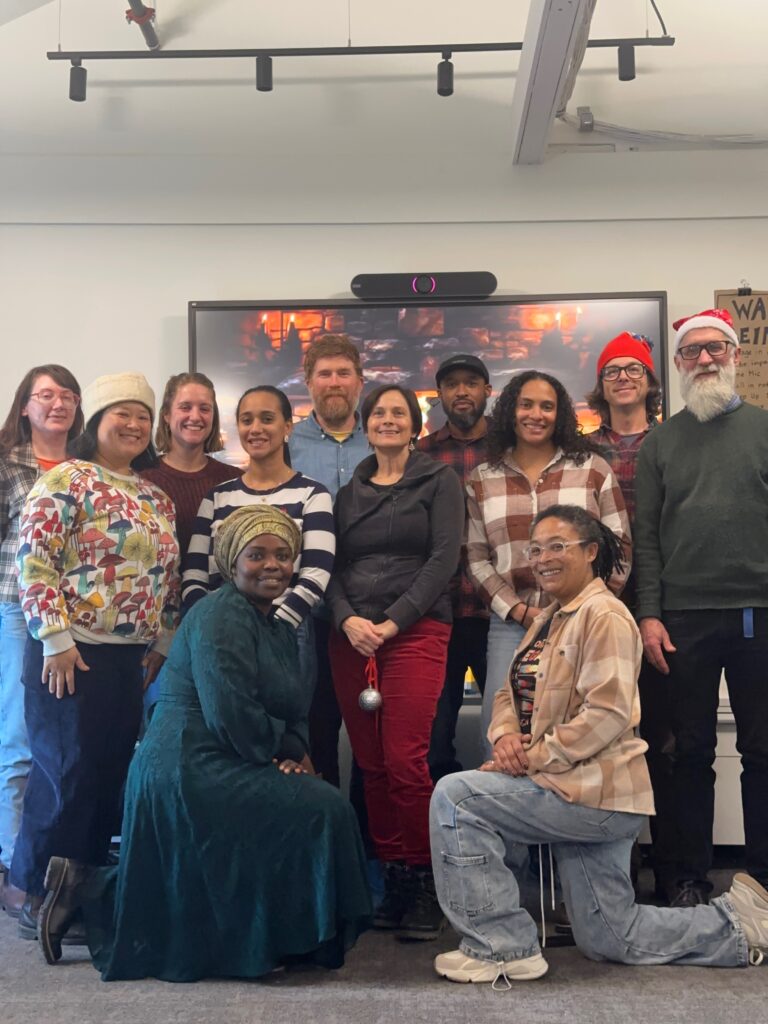
Every January, SCLT’s entire staff gathers for two days of reflection and conversation. Each program shares what they learned in the past year, guided by a set of questions that help frame the discussion: Who did you work closely with? What worked well? What challenged you? What data matters? Which partnerships strengthened, and which strained? What’s new and worth continuing? Where did you find moments of beauty, care, and joy? In February, we’ll gather again for one day to share our outlook for 2026.

2025 was marked by significant federal funding cuts that forced difficult staffing decisions. Our teams adapted, reorganized, and continued serving 25,000 Rhode Islanders through food access, community gardens, workforce development, and farmer support.

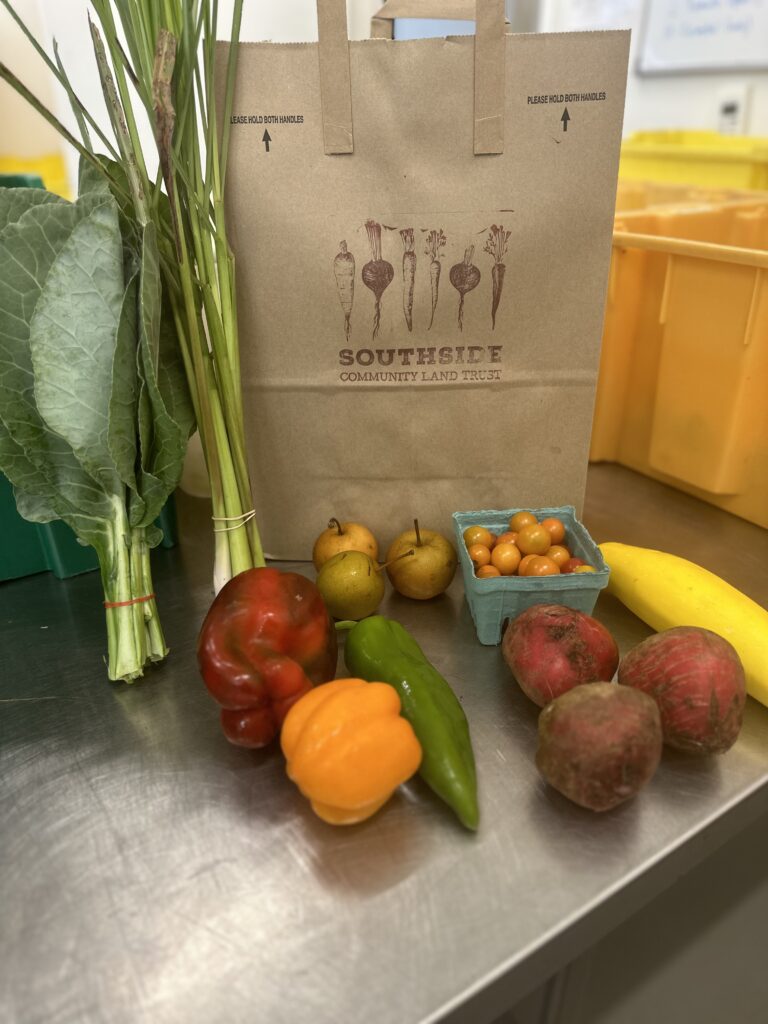
Our Produce Aggregation Program generated $140,881 in farmer sales in 2025, with 13 farm businesses participating. This represents meaningful progress, even as we acknowledge falling short of our $160,000 goal for farmer payouts, a gap that reflects the reality of reduced operational capacity. A major blow came in March with the cancelation of the USDA’s Local Food Purchase Assistance Cooperative Agreement, leaving us unable to offer farmers clear answers about market opportunities for months. Yet the program’s strength lies in its diversity. Our VeggieRx partnerships with Integra and Brown University Health distributed over 100 shares of fresh, local produce biweekly to people with diet-related health conditions. The partnership with Providence Parks now serves one recreation center with city council funding; we’re actively advocating for expansion to additional wards. And in a significant breakthrough, West African Superstore, owned and operated by Luna Walker at SCLT’s 404 Broad Street Healthy Food Hub, became the first community retailer in Rhode Island to participate in the Eat Well, Be Well incentive program. This program, the result of persistent collaboration between our Healthy Food Access Program Manager Kakeena Castro and the Department of Human Services, provides 50 cents in free produce for every dollar spent on fresh fruits and vegetables.

Our Farmer Training & Support program navigated significant organizational transitions in 2025. Ben Torpey stepped into the new Program Director role while Dan Roberts focused more on in-field work, and the team adapted to reduced capacity while maintaining core services. The year revealed both what’s possible and what’s breaking. An “atmosphere of dread” marked the landscape as teams processed staff reductions and grappled with having to say no to project requests due to lack of funding. Yet critical partnerships, particularly with URI Extension, created continuity even as capacity shrank. We’re seeing increased enrollment in Conservation Stewardship Programs (CSP) among our growers, a positive indicator of farmer investment in their operations and land stewardship. The Hmong Farm team completed significant infrastructure improvements with new signage, a LASA-funded tractor, and a functional well and water system, providing farmers with better tools and resources. We also deepened our focus on farmer business support, helping farmers complete annual farm business registrations with RIDEM and conducting post-season interviews to gather feedback and understand needs.

With roughly 300 gardeners across our community gardens network, 2025 was a year of steady participation rather than expansion. Staff layoffs in the gardens program meant our Farmer Training & Support team stepped into additional leadership roles in the Gardens program. Rather than collapse, the result was adaptation: Chandelle Wilson and Ben launched monthly garden leader meetings to process the transition and maintain connection across our network. Of 23 total garden leaders, 18 attended the first November meeting, a meaningful showing of resilience in the face of real loss.

Our Workforce Development Program served young people in Providence and Pawtucket in 2025, working across the Youth Enterprise Farm, City Farm, and Galego Community Farm. Despite reduced funding meaning fewer paid positions and fewer hours, we maintained a high retention rate among youth staff and deepened cross-cohort collaboration. The highlights speak to what happens when young people are given meaningful work and mentorship: four youth staff in Providence and two in Pawtucket graduated high school. Youth participated in field trips to Maisey’s Tree Farm, now in its third year of partnership, URI’s plant lab and animal farm, kayaking on the Blackstone River, and a Save the Bay boat trip to Prudence Island. Both program gardens were remarkably productive, yielding strawberries, watermelon, potatoes, carrots, and flowers funded through a Bloom RI grant. The cut flower garden at Galego became a community hub, directly encouraging residents to visit and engage with the space. We also launched important new trainings – First Aid/CPR certification and a Mental Health First Aid workshop – equipping young people with skills beyond agriculture.

One young person deserves particular mention: James Pastor Tzul, a former member of our youth staff, was recognized with an RIEEA Environmental Excellence Award. This recognition speaks to the leadership development happening on our farms and the real impact of the work young people do alongside our teams. Yet the year also revealed constraints. Reduced funding meant fewer opportunities for educational field trips and rural property visits. The partnerships that sustained us, particularly Groundwork Rhode Island in Pawtucket, now in its sixth year of collaboration, took time to build and continue to require intentional stewardship.

2025 revealed both SCLT’s capacity for adaptation and the toll of systemic disinvestment in food justice work. We did more with less because our farmers, gardeners, youth, and staff are deeply committed. But this is not sustainable, and we’re not pretending it is. The Cranston Food Hub construction beginning this week represents a necessary reinvestment in the infrastructure our farmers desperately need.

The real story of 2025 is the people, the farmers who kept growing despite uncertainty, the youth who showed up week after week, the community gardeners who tended their plots, and the staff who pivoted and persisted through a genuinely difficult year.

The work continues, in our gardens, on our farms, in the relationships we’re building with each other and our community.
Read more

Construction Underway: SCLT’s New Food Hub Takes Major Step Forward


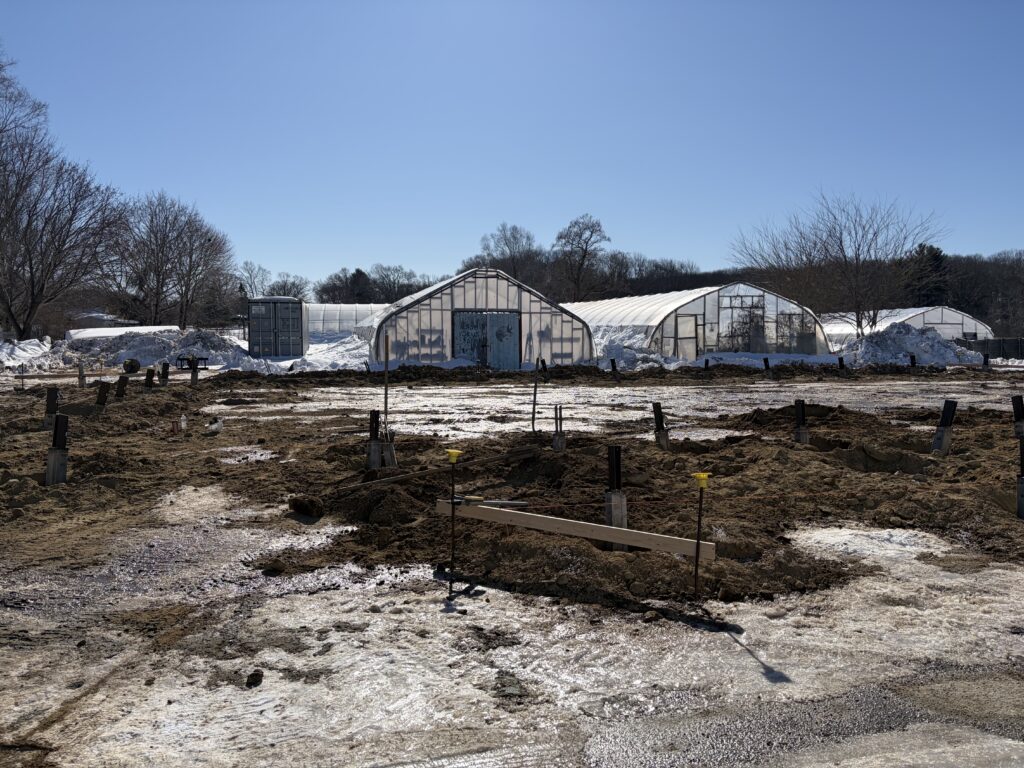
Construction of SCLT’s second food hub officially begins this week at Urban Edge Farm in Cranston. It’s a moment two years in the making and a testament to persistence through extended federal review processes and multiple rounds of revision. Now, after months of careful planning and coordination with experienced professionals, the vision is becoming concrete. Literally.

The journey began in January 2024 when SCLT submitted our application to the USDA’s Resilient Food Systems Infrastructure program. We waited. We revised. We adapted to changing federal guidance. And in March 2025, we received the official grant award letter. We were awarded the largest RFSI grant in New England and one of only four awards across the state of Rhode Island.

Since then, a dedicated team has been working to bring this to life. Project Director Matt Tracy, along with Ben Torpey, Dan Roberts, Kakeena Castro, Margaret DeVos, Isabelle Izobankiza, and Sam Shepherd, plus invaluable input from the broader team, have navigated permitting, site design, and contractor coordination.

Here’s the story: Our Produce Aggregation Program has exploded. In 2021, farmers in our network generated $49,000 in revenues. By 2025, that number reached $140,000. That growth reflects the quality of the produce and the deep demand in our community for fresh, culturally familiar food. It also means we’ve hit a wall. Our Farm-to-Market Center in Providence has reached capacity. We can’t process, store, or distribute more than we already are from that location. Building a new hub in Cranston, where most of SCLT’s produce is actually grown, is the next step. Over 20 farm operations at Urban Edge Farm sell produce through our aggregation program. More than 100 additional farmers work at nearby properties: Good Earth Farm, Hmong Community Farm, Snake Den Farm, Bami Farm, and independent producers increasingly contributing to our network.

The deeper challenge is Rhode Island’s agricultural reality. Our state has the highest agricultural real estate costs in the nation, six times the national average. For beginning farmers, especially those from historically marginalized communities, acquiring land and building infrastructure feels impossible. On our managed lands at Urban Edge and Good Earth, more than 75% of farmers identify as Black, Indigenous, or people of color. Two-thirds are women. Half live in South Providence. Many are immigrants and refugees from Southeast Asia, Africa, and the Dominican Republic who bring invaluable agricultural knowledge but face systemic barriers to land, markets, and infrastructure.

The new food hub addresses these barriers directly. By investing in modern produce aggregation, storage, and distribution infrastructure, we’re helping farmers increase production, improve product quality, and access new markets while improving food safety. This isn’t just about moving more vegetables. It’s about enabling farmers to build sustainable operations and claim economic power in a system designed to exclude them.

The facility itself, funded primarily through the USDA grant, will include modern indoor pack lines for sorting and processing, three walk-in coolers, a walk-in freezer, and a refrigerated delivery van connecting the new hub to our Farm-to-Market Center in Providence.

But this packhouse is just Phase 1. We’re thinking bigger. Over the next five years, we hope to transform Urban Edge Farm with a suite of improvements: upgraded water and sewer systems, HVAC, restrooms, electrical upgrades, drainage improvements, and road work.

This winter, we received a significant boost toward these aspirational goals. The Growing Justice Fund, a national funder supporting food justice work led by organizations centered on racial equity, awarded SCLT a grant to support the buildout of the food hub. It places us within a network of organizations across the country operating from the same conviction: food justice requires centering the voices, leadership, and ownership of communities most impacted by food system inequities. We’re also pursuing additional funding from NRCS and private donors to make these longer-term improvements real. Some will happen. Some may face regulatory barriers. Some may need to be reimagined. That’s the work ahead.

None of this happens alone. Building Futures Rhode Island has been instrumental in site improvements at Urban Edge and Good Earth Farms, and will continue supporting the new hub’s interior buildout. The Rhode Island Department of Environmental Management (RIDEM) has been a steadfast partner in this ongoing improvements project since 2002, when SCLT secured a long-term lease at Urban Edge Farm. That partnership reflects something deeper: RIDEM’s Division of Agriculture recognizes that supporting community-based food production is core to the state’s agricultural future. We’re honored to work alongside them.

Construction will be ongoing through 2026, with full facility operations commencing in 2027. We’ll see the steel structure rise by April, foundation and utility work through May and June, interior buildout over the summer, and equipment installation in the fall. Throughout this process, we’ll work closely with our farming partners to ensure a smooth transition, offering training on new equipment and best management practices.

This hub is being built not just for farmers, but with them. Our vision is to move toward greater farmer governance and decision-making as the hub matures, building something that farmers lead and own, not something imposed upon them.

The hub will serve approximately 150 local and regional agricultural producers, including farmers at Urban Edge and Good Earth, more than 30 from the Hmong United Association of Rhode Island land access project, and partner farms across the region. It will be cooperatively utilized and governed, designed to strengthen the broader farming community.

This facility represents an investment in the middle of our food supply chain, the infrastructure gap that has constrained what’s possible for small, historically excluded farmers. As we lay the groundwork this week, we’re grateful for the farmers, partners, funders, and community members who’ve helped bring us to this pivotal moment.

Stay tuned for more updates on this exciting project!

Read more

Final weeks to stock up on fresh, local produce at outdoor farmers markets

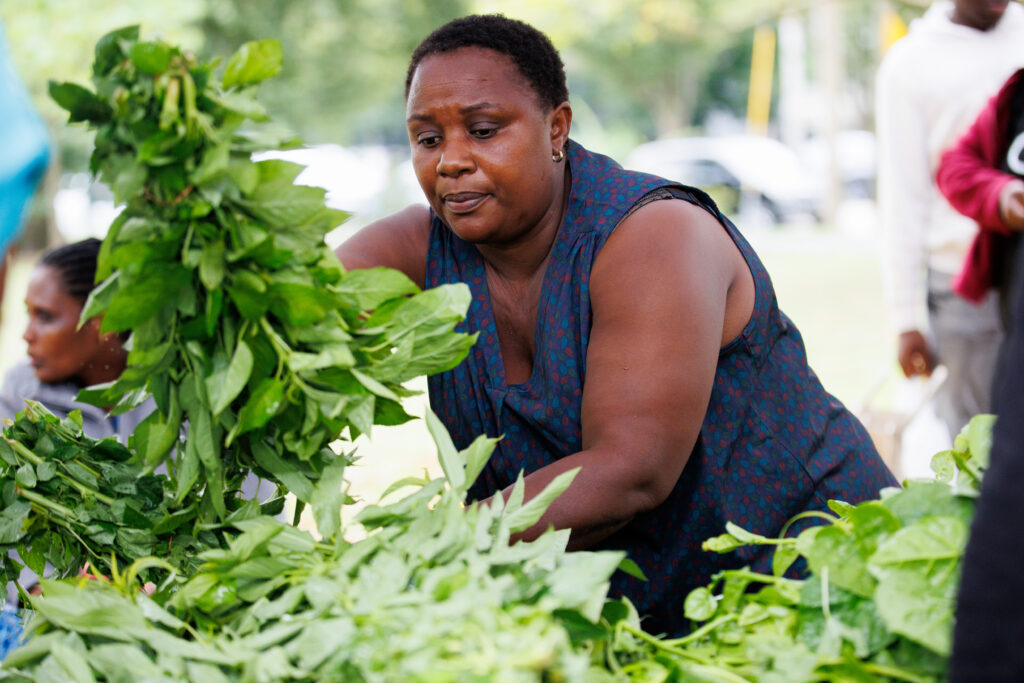
Charlotte Uwimpuhwe at the market. Photo by Matthew Healey for Southside Community Land Trust


As October’s crisp air signals the changing season, Rhode Island’s beloved community farmers markets are preparing for their final curtain calls of 2025. Southside Community Land Trust invites shoppers to make the most of the last few weeks of farm bounty at both the Armory Park Farmers Market and the Hope Street Farmers Market. These markets have served as vital community gathering spaces throughout the growing season, connecting urban residents directly with the farmers who grow their food.

The Armory Park Farmers Market, held every Thursday from 3-7pm at Dexter Park in Providence, has been a neighborhood institution since its inception. Operating from June through October, the market provides accessible, affordable fresh produce in a community that has historically faced barriers to healthy food access. Shoppers can use WIC, SNAP/EBT benefits, and other assistance programs, ensuring that everyone can participate in the local food economy. The Thursday evening timing allows working families to stop by after school and work, transforming the market into a social hub where neighbors reconnect over peak-season tomatoes and late-harvest greens.

Meanwhile, the Hope Street Farmers Market continues its Saturday morning tradition at Lippitt Park, where Hope Street and Blackstone Boulevard meet. Running from 9:00am to 1:00pm, this farmer-run cooperative showcases Rhode Island’s best farmers and food artisans selling fruits, vegetables, flowers, cheese, breads and pastries, pasture-raised meats, seafood, poultry, eggs, and more. The market’s festive atmosphere features live acoustic music each Saturday, inviting families to bring blankets and turn their shopping trip into a picnic experience. With operations extending through October 25, Hope Street Market offers some of the season’s longest access to locally grown food.

At both markets, shoppers will find produce from SCLT’s own City Farm, carefully tended by City Farm Steward Rich Pederson and Assistant Steward and Youth Program Coordinator Ellen Asermely. Pederson, who joined SCLT in 2001 after years as a Peace Corps volunteer and schoolteacher, has spent more than two decades demonstrating how to grow “mega amounts of produce, safely, in the city” while maintaining what he calls a supportive and fun learning environment. He proudly claims to have been the first farmer in the area to bring garlic scapes to farmers markets. Working alongside him, Asermely, who came to SCLT in 2021 as a TerraCorps service member and describes Pederson as her “wonder twin,” has embraced bio-intensive agricultural practices while coordinating the youth program that brings the next generation onto the farms. Together, hosting a slate of dedicated volunteers, they’ve cultivated the three-quarter-acre demonstration farm into both a thriving center of biodiversity and a living classroom. City Farm’s organic vegetables, grown using environmentally responsible methods, represent the culmination of months of careful cultivation by farm stewards, volunteers, and youth program participants. The farm’s presence at both markets embodies SCLT’s mission to create equitable access to healthy food while supporting the next generation of urban farmers. Some of Providence’s most renowned restaurants source from City Farm, but these final market weeks offer everyday shoppers the same farm-to-table quality.

With the 2025 growing season drawing to a close, these final weeks at Armory Park and Hope Street markets represent more than just last-chance shopping; they’re a celebration of community resilience, agricultural abundance, and the relationships built between farmers and neighbors throughout the year. Whether stopping by Thursday evening in the heart of Providence or Saturday morning on the East Side, shoppers can stock up on storage crops like winter squash and root vegetables while savoring the last of the season’s tender greens. It’s a final opportunity to support local farmers, enjoy the fruits of Rhode Island’s soil, and carry the taste of summer into the coming months.

Read more

SCLT builds partnerships for free farmers market series

When families hear about an SCLT free farmers market pop-up coming to their neighborhood, they know it’s an opportunity not to be missed. These one-time events bring fresh, locally grown produce directly to communities that often lack reliable access to nutritious food.

Through Southside Community Land Trust’s produce aggregation program, families across these communities are discovering that nutritious food doesn’t have to be a luxury. Thanks to the generous support of our season partners – Blue Cross Blue Shield of Rhode Island, United Healthcare, Navigant Credit Union, BankRI, Garden Grille, and Wildflour – SCLT is breaking down the barriers that have long separated nutrition-insecure neighborhoods from fresh, healthy food.

The concept is elegantly simple yet powerfully effective. Our season partners cover the cost of purchasing locally grown produce directly from small-scale farmers across Rhode Island. SCLT then aggregates this fresh bounty and brings it directly to the communities that need it most through pop-up markets in the lowest income, lowest access areas of Providence, Pawtucket, and Central Falls.

In 2024, this collaborative effort resulted in 14 free farmers market pop-ups hosted in partnership with community-based organizations throughout these core cities. The impact was immediate and substantial: thousands of pounds of fresh vegetables, herbs, and honey reached hundreds of nutrition-insecure individuals and families who might otherwise struggle to afford or access such quality produce.

These free farmers market pop-ups represent something far more significant than traditional food distribution. They’re special community events where neighbors connect, children learn about healthy eating, and families can select fresh ingredients with dignity. Each pop-up creates a momentary transformation of the neighborhood, bringing not just food but hope and community connection to areas that often lack access to fresh produce.

This model creates a win-win scenario that strengthens Rhode Island’s entire food ecosystem. Small-scale farmers receive fair compensation for their produce, while families in underserved communities gain access to the freshest local vegetables, herbs, and honey through these special events. The economic impact ripples through the community, supporting local agriculture while addressing food insecurity.

The success of SCLT’s produce aggregation program proves that with the right partnerships and community commitment, we can create meaningful interventions in food access. When businesses, financial institutions, and community organizations come together with a shared vision, they can transform not just individual lives but entire neighborhoods, one pop-up market at a time.

As we continue to expand these free farmers market pop-ups, the partnerships with our season sponsors remain crucial. Their investment goes beyond financial support—it’s a commitment to equity, health, and community resilience. Every pound of fresh produce distributed at these special events represents a step toward a more just and sustainable food system for all Rhode Islanders.

The success of this model shows there’s room for more partners to join this transformative work. Organizations and businesses interested in becoming season sponsors can help bring fresh, locally grown produce to even more communities throughout Rhode Island. To learn more about sponsorship opportunities and how your organization can make a difference in food access, contact Kakeena Castro, Aggregation Program Manager, at kakeena@southsideclt.org.

The free farmers market pop-ups hosted by SCLT prove that access to healthy food is not just a dream but an achievable reality when communities come together with purpose and partners commit to meaningful change.

Read more

SCLT in the Spotlight: Food Systems Featured in Regional News

Ben Torpey, Margaret DeVos, and Kakeena Castro stand in SCLT’s Farm-to-Market Center in South Providence. Credit: The Boston Globe

Recent weeks have brought significant attention to Southside Community Land Trust and the critical challenges facing our mission to ensure access to fresh, nutritious food for all Rhode Islanders. As media outlets including the Boston Globe, Providence Journal, and WPRI 12 have reported, federal funding cuts have created an unprecedented crisis for organizations like ours that connect local farmers with communities in need.

The impact of these cuts is staggering. As Margaret DeVos, our executive director, told the Boston Globe, “It’s outrageous. Never before have we not been able to get behind as a country to help the farms and the hungry.”

The reality we face is stark: federal funding freezes and contract cancellations have resulted in a devastating $600,000 reduction to our annual budget, threatening programs that served approximately 25,000 Rhode Islanders through food pantries and community meal sites last year while supporting nearly three dozen small family farm businesses.

The Boston Globe’s coverage highlighted the human dimension of this crisis. At Urban Edge Farm in Cranston, where SCLT serves as farm manager, the concerns are deeply personal. Garmai Mawolo, a Liberian immigrant from Providence who owns Looffa Farm, expressed her anxiety: “It’s too much. We don’t know what to do. I turn on the TV [news] and it makes my heart race. How will we pay our rent? How will we pay our bills?” These are the real voices behind the statistics – hardworking farmers whose livelihoods are threatened while the communities they feed face increasing food insecurity.

In response to this crisis, we’ve been heartened by the Rhode Island Foundation’s recent announcement, covered by multiple news outlets. As David N. Cicilline, Foundation president and CEO, powerfully stated, “Imagine empty shelves at local food pantries, the end of job training programs, small business assistance drying up, Head Start programs going dark, or children going hungry.” The Foundation’s commitment of $3 million to help nonprofits affected by federal funding cuts represents a crucial lifeline, though as many have noted, the magnitude of the funding gap cannot be filled by philanthropy alone.

WPRI’s Melissa Sardelli joins SCLT’s Ellen Asermely, Jair Ascencao, Margaret DeVos, and Rich Pederson, with Somerset Federal Credit Union’s Amy Derosa gather at City Farm

The recognition of our work extends beyond the current crisis. In a bright spot amid challenging news, WPRI 12 recently honored Southside Community Land Trust through their “12 Gives Back” program, delivering thanks and recognition on behalf of the TV station, their sponsor Somerset Federal Credit Union, and the community – an acknowledgment of our four decades of transforming urban spaces into productive agricultural sites and supporting food security throughout Rhode Island.

Looking forward, we remain committed to our core mission despite these unprecedented challenges. Since our founding in 1981, when South Providence residents and Hmong refugees worked with visionary Brown University graduates to create spaces to grow culturally familiar foods, we have expanded to manage over 60 community gardens and urban farms throughout Rhode Island. The current crisis reinforces rather than diminishes the urgency of our work – ensuring that all Rhode Islanders, regardless of income or background, have access to fresh, nutritious, and culturally appropriate food.

As we navigate these difficult times, we invite our community to join us in standing up for food justice and security. Whether through volunteering, donations, advocacy, or simply spreading awareness, your support is more crucial than ever as we fight to preserve programs that have become lifelines for thousands of Rhode Islanders. Together, we can ensure that the vision that has guided SCLT for over four decades continues to flourish even in the face of unprecedented challenges.

Read more

Remembering Rob Yaffe: A Pioneer in Rhode Island’s Local Food Movement

Robert Yaffe at SCLT’s City Farm in 2019, courtesy of Providence Monthly

When Rob Yaffe passed away on February 12, 2025, Rhode Island lost more than a successful restaurateur—it lost a visionary who transformed how our community thinks about food, sustainability, and the connections between them.

Rob’s journey began with a rich family legacy. His grandmother Reggie adopted a raw food vegan diet and began practicing yoga and meditation as early as 1940—decades before these practices became mainstream. His mother Erna continued this tradition by opening The Golden Sheaf in 1971, Providence’s first natural foods store. When Rob was just 23, his mother passed away unexpectedly, putting him in charge of the store. This early responsibility shaped his understanding of how food businesses could serve as anchors for community change.

In 1996, Rob opened Garden Grille in Pawtucket, establishing what would become Rhode Island’s longest-running vegetarian restaurant. He later expanded his vision with Wildflour Vegan Bakery and Cafe in 2010, and The Grange in 2013, which operated for nine years on Broadway in Providence. Through these establishments, Rob created spaces where plant-based eating wasn’t just accessible—it was exciting and delicious. “It’s about community,” Rob once said about his restaurants’ mission. “We exist to provide experiences where people connect with each other. If we’re not doing that, then why are we here?”

Rob’s relationship with Southside Community Land Trust was deep and enduring. He and his wife Uschi supported SCLT in countless ways over the years—hosting fundraisers, donating food from their restaurants to our events, and even donating all profits from their Table to Farm fundraiser at The Grange to support our work. After seeing the documentary “A Place at the Table” about hunger in the United States, Rob organized a screening in partnership with SCLT at Congregation Beth Sholom, demonstrating his commitment to food justice beyond his own restaurants.

As a business owner, Rob practiced what he preached. His restaurants were among the largest customers of Farm Fresh RI, and they regularly purchased produce from the Little City Growers Coop that started with Southside. In a 2019 interview with Providence Monthly, Rob noted: “We’re in the middle of a major shift. It’s not just what you eat, but where are you getting it from?” This question of provenance—of knowing your food’s origins and the hands that grew it—remains central to SCLT’s mission today.

Rob understood that his support of SCLT served a deeper purpose. “Helping Southside is a way to enable people who can’t afford to eat out to nonetheless be able to buy and grow organic, healthy food,” he explained. “Our missions are completely aligned.” This statement captures the essence of Rob’s approach to business and community—recognizing that true food system change must include everyone, regardless of economic status.

Though Rob wasn’t preachy about vegetarianism (only Wildflour was completely vegan), he delighted in hearing from new customers who were surprised by how satisfying meatless dishes could be. “We’re able to give people a transformative experience,” he said. “We have an opportunity to change peoples’ consciousness.” This philosophy of gentle transformation rather than forceful conversion characterized his approach to advancing plant-based eating in Rhode Island.

As we at Southside Community Land Trust continue our work to create a more just and sustainable local food system, we carry Rob Yaffe’s legacy with us. His vision of connecting good food with community, his belief in making healthy options accessible to all, and his quiet persistence in transforming our food landscape will continue to inspire our mission for years to come.

Read more

Breaking Bread: SCLT’s decade-long staff lunch tradition nourishes community

At Southside Community Land Trust, the connection to food runs deeper than our agricultural programs. For over a decade, staff members have maintained a unique tradition of cooking lunch for each other three days a week, creating a ritual that builds community and celebrates culinary creativity.

Every Tuesday, Wednesday, and Thursday at exactly noon, the office transforms into a communal dining space as more than half of SCLT’s staff participate in this rotating lunch schedule. The menu spans continents and seasons, featuring everything from hearty borscht and savory pies to broccoli rabe sandwiches and homemade pizzas. An ever-changing parade of soups, stews, and creative dishes reflects both the staff’s diverse culinary talents and their deep connection to food culture.

“This tradition is really something special,” says Sam Shepherd, SCLT’s Grants & Communications Coordinator. “In all my years working in nonprofits, I’ve never seen anything quite like it. When we take the time to cook for each other, we’re doing more than sharing a meal – we’re showing genuine care for our colleagues. The conversations and connections that happen around our lunch table are just as nourishing as the food itself.”

The tradition exemplifies SCLT’s commitment to building community through food, extending our mission beyond gardens and farms and right into the workplace kitchen. As staff members trade recipes and share cooking techniques, these thrice-weekly gatherings have become a cornerstone of SCLT’s organizational culture, proving that some of the strongest workplace bonds are forged over a home-cooked meal.

Read more

Black Food Liberation: Understanding History, Creating Change

Southside Community Land Trust and Roots 2Empower invite you to join us for the first in a powerful series of workshops exploring the intersection of food justice, Black agricultural heritage, and community empowerment.

Led by Tarshire Battle, founder and executive director of Roots 2Empower, this inaugural session will examine the profound historical connections between Black communities and agriculture in the United States. Participants will gain insight into how the legacy of enslavement and subsequent land loss continues to shape contemporary food systems, while exploring pathways toward food sovereignty and community resilience.

The workshop focuses on practical applications, helping participants identify current challenges facing Black communities and define core principles of Food Liberation. Attendees will leave with concrete strategies for launching food justice initiatives that promote self-determination and equity in their own communities.

Tarshire Battle brings exceptional depth of experience to this workshop. As the leader of Roots 2Empower, a Rhode Island nonprofit advancing social justice across southern New England, she combines academic expertise with hands-on knowledge. Her background as a published author, herbalist, Master Gardener, artist, farmer, and community organizer informs her holistic approach to food justice work. Battle holds master’s degrees in Public Administration from Northeastern University and Mental Health Counseling from Boston University.

This workshop welcomes participants of all experience levels and backgrounds who are committed to understanding and advancing food justice. Future sessions in the series will build upon these foundational concepts to explore specific aspects of implementing Food Liberation projects.

Event Details: Date: Saturday, February 22, 2025 Time: 11:00 AM – 12:30 PM Location: 404 Broad Street, Providence, RI Cost: Free (donations accepted) Registration required: https://bit.ly/FoodJustice101

Space is limited. Register early to secure your spot in this groundbreaking workshop series.

Read more

2024: Our Year in Review

SCLT staff and Board of Directors members gather at SCLT’s Youth Enterprise Farm in South Providence for a photo in December, 2024


Southside Community Land Trust marked 2024 as a year of significant expansion and deepening impact across Rhode Island’s food system. The organization’s Produce Aggregation and VeggieRx programs delivered more than 44,000 pounds of locally grown produce to 9,750 people, with 97% of recipients being low-income residents. Through its network of 40 small-scale farm operations, SCLT facilitated the distribution of fresh, culturally relevant produce to markets, restaurants, and institutions throughout the state.

The organization’s comprehensive annual program review highlighted substantial achievements in youth engagement and workforce development, with 50 young people receiving employment and education in sustainable agriculture. Community gardens continued to thrive, supporting more than 1,600 gardeners across 23 locations. The year also saw the successful expansion of partnerships with healthcare providers, schools, and social service organizations, enabling SCLT to reach more than 25,000 Rhode Islanders through various programs.

“We can take great pride in the accomplishments of the past few years, but we also carry a deep concern for the future of our work,” said Margaret DeVos, Executive Director of SCLT. “The wells of pandemic crisis response resources – major drivers of much of our recent growth – are drying up. We find ourselves at a critical juncture that demands immediate attention and support.”

Supporting these initiatives, SCLT secured several significant grants in 2024, including funding from the Governor’s Workforce Board’s Real Skills for Youth program, the Rhode Island Foundation, and the Papitto Opportunity Connection, among others. These investments strengthened core programs in youth development, produce aggregation, farmer training, and community garden support. The organization also received crucial general operating support from foundations including the Island Foundation, enabling flexible response to community needs.

Looking ahead to 2025, SCLT’s program review process identified opportunities for growth while acknowledging the challenges posed by expiring pandemic-era funding programs. The organization remains focused on sustaining its momentum through new funding opportunities, including potential support through Senator Reed’s proposed EAT Local Foods Act, while maintaining its commitment to building a more equitable and sustainable local food system for Rhode Island.

Read more

SCLT Featured in Rhode Island Spotlight


This January, Rhode Island PBS will air a 10-minute video documentary on Southside Community Land Trust’s four-decade journey of transforming urban spaces into productive agricultural sites across Providence and supporting statewide food access efforts. The documentary, produced by Jim Hummel of Rhode Island Spotlight, chronicles SCLT’s expansion from its 1981 beginnings with two community gardens to its current network of 60 farms and gardens serving over 1,600 community gardeners and their families annually.

Featured in a writeup in The Providence Journal as well as upcoming PBS broadcasts, the piece explores SCLT’s comprehensive approach to food security through innovative programs like VeggieRx: healthcare partnerships providing veggie prescriptions for food insecure patients. The documentary includes interviews with longtime SCLT staff member Rich Pederson, who discusses City Farm’s role as a demonstration site growing 80 varieties of vegetables, and Charlotte Uwimphuhwe, who operates a successful farming enterprise at Urban Edge Farm in Cranston.

The Rhode Island Spotlight documentary will premiere on Rhode Island PBS on January 11th at 9:47 PM, with additional airings throughout the following week. For more information about SCLT’s work and impact, viewers can read the complete feature article in The Providence Journal or visit RhodeIslandSpotlight.org.

Catch the video on RIPBS:

  • Sat 01/11/2025 at 9:47 PM
  • Sun 01/12/2025 at 2:52 AM
  • Mon 01/13/2025 at 3:16 AM
  • Mon 01/13/2025 at 3:43 PM
  • Tue 01/14/2025 at 4:51 PM
  • Tue 01/14/2025 at 10:46 PM
  • Wed 01/15/2025 at 03:52 AM
  • Thu 01/16/2025 at 4:16 PM
  • Fri 01/17/2025 at 4:46 PM
  • Fri 01/17/2025 at 12:44 PM
  • Fri 01/17/2025 at 10:46 PM
  • Sat 01/18/2025 at 7:44 PM
Read more