(401) 273-9419
sclt@southsideclt.org

404 Broad

2025 Program Review: Finding Our Way Forward

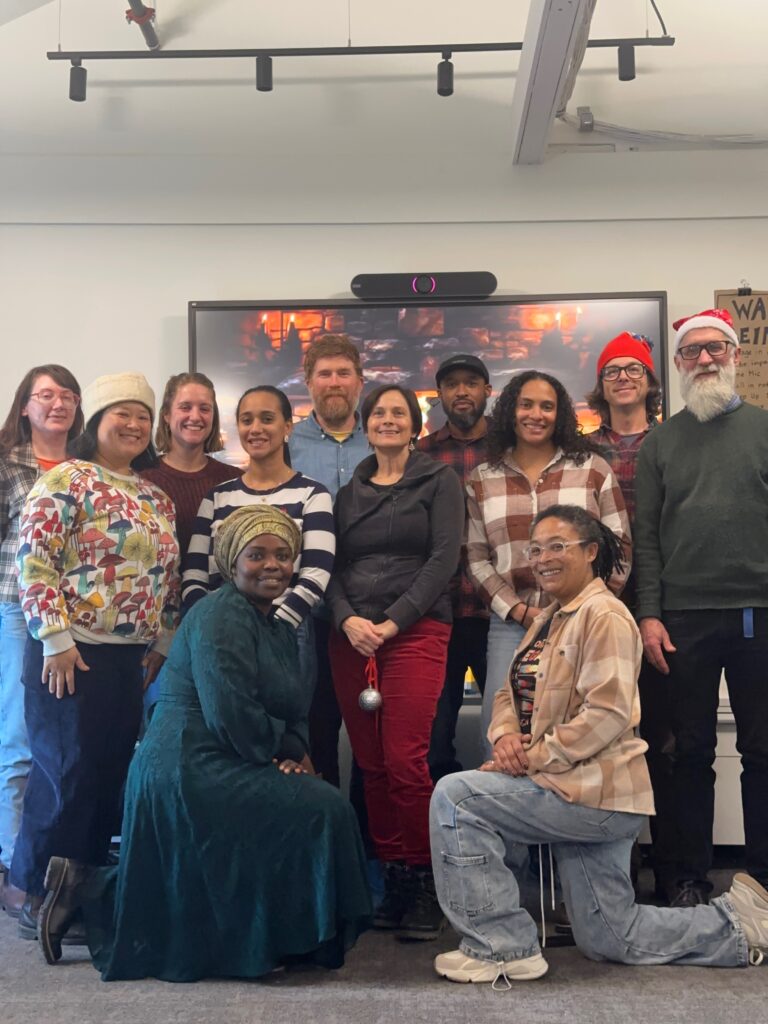
Every January, SCLT’s entire staff gathers for two days of reflection and conversation. Each program shares what they learned in the past year, guided by a set of questions that help frame the discussion: Who did you work closely with? What worked well? What challenged you? What data matters? Which partnerships strengthened, and which strained? What’s new and worth continuing? Where did you find moments of beauty, care, and joy? In February, we’ll gather again for one day to share our outlook for 2026.

2025 was marked by significant federal funding cuts that forced difficult staffing decisions. Our teams adapted, reorganized, and continued serving 25,000 Rhode Islanders through food access, community gardens, workforce development, and farmer support.

Our Produce Aggregation Program generated $140,881 in farmer sales in 2025, with 13 farm businesses participating. This represents meaningful progress, even as we acknowledge falling short of our $160,000 goal for farmer payouts, a gap that reflects the reality of reduced operational capacity. A major blow came in March with the cancelation of the USDA’s Local Food Purchase Assistance Cooperative Agreement, leaving us unable to offer farmers clear answers about market opportunities for months. Yet the program’s strength lies in its diversity. Our VeggieRx partnerships with Integra and Brown University Health distributed over 100 shares of fresh, local produce biweekly to people with diet-related health conditions. The partnership with Providence Parks now serves one recreation center with city council funding; we’re actively advocating for expansion to additional wards. And in a significant breakthrough, West African Superstore, owned and operated by Luna Walker at SCLT’s 404 Broad Street Healthy Food Hub, became the first community retailer in Rhode Island to participate in the Eat Well, Be Well incentive program. This program, the result of persistent collaboration between our Healthy Food Access Program Manager Kakeena Castro and the Department of Human Services, provides 50 cents in free produce for every dollar spent on fresh fruits and vegetables.

Our Farmer Training & Support program navigated significant organizational transitions in 2025. Ben Torpey stepped into the new Program Director role while Dan Roberts focused more on in-field work, and the team adapted to reduced capacity while maintaining core services. The year revealed both what’s possible and what’s breaking. An “atmosphere of dread” marked the landscape as teams processed staff reductions and grappled with having to say no to project requests due to lack of funding. Yet critical partnerships, particularly with URI Extension, created continuity even as capacity shrank. We’re seeing increased enrollment in Conservation Stewardship Programs (CSP) among our growers, a positive indicator of farmer investment in their operations and land stewardship. The Hmong Farm team completed significant infrastructure improvements with new signage, a LASA-funded tractor, and a functional well and water system, providing farmers with better tools and resources. We also deepened our focus on farmer business support, helping farmers complete annual farm business registrations with RIDEM and conducting post-season interviews to gather feedback and understand needs.

With roughly 300 gardeners across our community gardens network, 2025 was a year of steady participation rather than expansion. Staff layoffs in the gardens program meant our Farmer Training & Support team stepped into additional leadership roles in the Gardens program. Rather than collapse, the result was adaptation: Chandelle Wilson and Ben launched monthly garden leader meetings to process the transition and maintain connection across our network. Of 23 total garden leaders, 18 attended the first November meeting, a meaningful showing of resilience in the face of real loss.

Our Workforce Development Program served young people in Providence and Pawtucket in 2025, working across the Youth Enterprise Farm, City Farm, and Galego Community Farm. Despite reduced funding meaning fewer paid positions and fewer hours, we maintained a high retention rate among youth staff and deepened cross-cohort collaboration. The highlights speak to what happens when young people are given meaningful work and mentorship: four youth staff in Providence and two in Pawtucket graduated high school. Youth participated in field trips to Maisey’s Tree Farm, now in its third year of partnership, URI’s plant lab and animal farm, kayaking on the Blackstone River, and a Save the Bay boat trip to Prudence Island. Both program gardens were remarkably productive, yielding strawberries, watermelon, potatoes, carrots, and flowers funded through a Bloom RI grant. The cut flower garden at Galego became a community hub, directly encouraging residents to visit and engage with the space. We also launched important new trainings – First Aid/CPR certification and a Mental Health First Aid workshop – equipping young people with skills beyond agriculture.

One young person deserves particular mention: James Pastor Tzul, a former member of our youth staff, was recognized with an RIEEA Environmental Excellence Award. This recognition speaks to the leadership development happening on our farms and the real impact of the work young people do alongside our teams. Yet the year also revealed constraints. Reduced funding meant fewer opportunities for educational field trips and rural property visits. The partnerships that sustained us, particularly Groundwork Rhode Island in Pawtucket, now in its sixth year of collaboration, took time to build and continue to require intentional stewardship.

2025 revealed both SCLT’s capacity for adaptation and the toll of systemic disinvestment in food justice work. We did more with less because our farmers, gardeners, youth, and staff are deeply committed. But this is not sustainable, and we’re not pretending it is. The Cranston Food Hub construction beginning this week represents a necessary reinvestment in the infrastructure our farmers desperately need.

The real story of 2025 is the people, the farmers who kept growing despite uncertainty, the youth who showed up week after week, the community gardeners who tended their plots, and the staff who pivoted and persisted through a genuinely difficult year.

The work continues, in our gardens, on our farms, in the relationships we’re building with each other and our community.
Read more

Welcoming Our New Board Members: Building Community Leadership


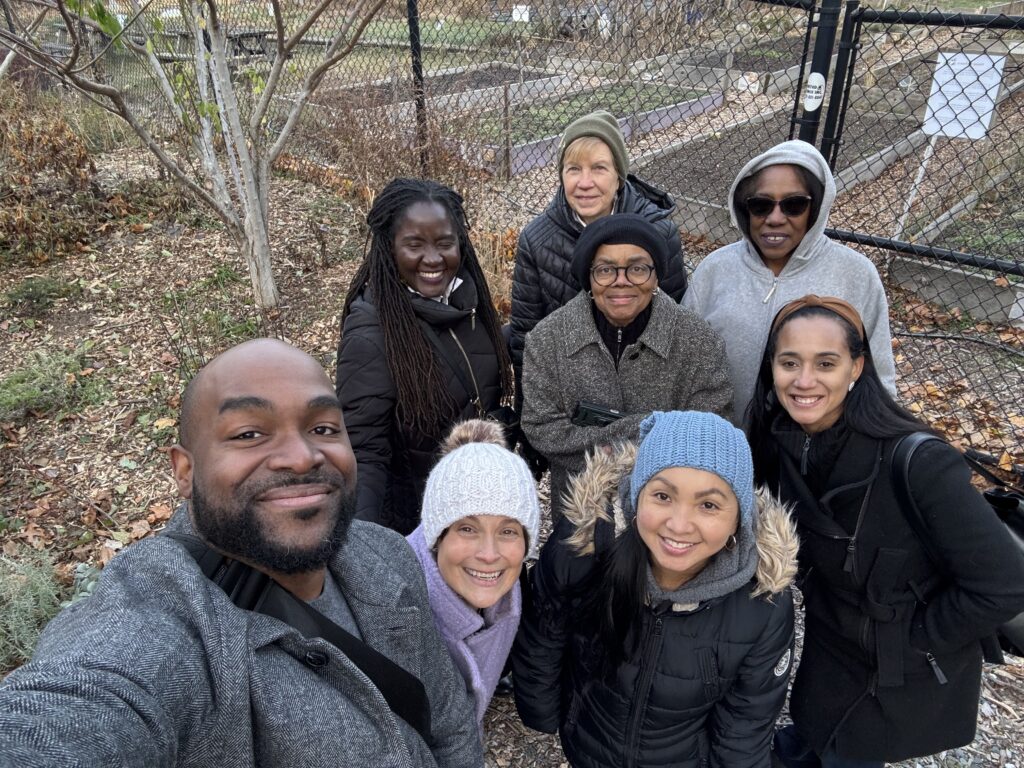
Three remarkable leaders have recently joined SCLT’s Board of Directors: Mariama Kurbally, Shane Lee, and Sherri Gibbs. You may have encountered them at our annual year-end community celebration in December 2025, where they mingled over a potluck of international cuisine and participated in our lively raffle alongside farmers, gardeners, staff, fellow board members, families, and friends. Shane also joined us in November for our annual Board and Staff Racial Equity/Social Justice retreat at Open fArms Retreat in Cumberland, hosted by Board member Andraly Horn. It was a day of collaborative work and meaningful discussion, a chance to get to know one another beyond titles and credentials. That’s exactly who these three are: leaders grounded in real community connection.

Mariama Kurbally brings two decades of institutional transformation experience to the board. As Chief Executive and Program Officer of E2 EMPOWERED, a strategy consulting firm with offices in Dallas and Providence, she specializes in helping organizations operationalize systemic change. Her background spans school and state-level impact work, where she’s coached executives through equity-centered redesigns that center historically marginalized and disinvested communities, exactly the communities SCLT serves.

A first-generation graduate of Rhode Island College and the University of Michigan with a master’s in Educational Leadership, Mariama has trained teams across fifteen states and served as an international trainer in equity-centered and liberatory design practices. Her expertise in strategic communication and data analysis for systemic transformation will help SCLT scale impact and communicate our work authentically. As a Black immigrant woman, she brings lived experience to our commitment to centering equity in every aspect of our organization.

Shane Lee is the director of training and special projects at the Nonviolence Institute. Born and raised in Providence, he understands firsthand the challenges our neighbors face, like poverty, violence, and limited access to opportunity. His Level 3 certification in Kingian Nonviolence, earned through training with legendary civil rights activist Rev. Dr. Bernard Lafayette Jr., grounds his approach to community change in principles of dignity and collective liberation.

Shane’s work spans non-profit, medical, law enforcement, education, and corporate sectors both nationally and internationally. He helps community members recognize how they can use what they have, through art, education, and economic development, to create better futures. A reverend, devoted father of five, singer-songwriter, and board member of The Avenue Concept, a public arts organization in Providence, Shane embodies the integrated approach to community transformation that SCLT champions. His belief that sustainable change is possible even in the most challenging times mirrors our own.

Sherri Gibbs brings four decades of experience as an educator, community leader, and wellness practitioner. For nearly two decades, she led elementary school operations with the East Providence School Department. Before that, she taught special education in New Bedford and spent eight years providing educational services to inmates at Bristol County Correctional Facility, work that reflects her deep commitment to meeting people where they are and creating pathways forward.

Her community involvement extends across multiple decades and sectors. She coordinated NAACP Youth Councils in New Bedford from 1983 to 1990, remains active with the NAACP Providence Branch and the National Association of Professional Women, and since 2015 has operated Creating Community Awareness of Spirit & Energy, a holistic healing practice rooted in Reiki and wellness. She’s also worked as a Human Resources Consultant and as Program Coordinator at the Multicultural Invocation Center, supporting high school students in career development and financial literacy.

As we move into 2026, these three bring exactly what we need. Mariama’s systems transformation expertise, Shane’s deep roots in Providence and commitment to economic justice, and Sherri’s decades of dedication to education and whole-person wellness strengthen our board and deepen our capacity to serve. We’re building something that requires all of these skills, all of these perspectives, all of this heart.

Welcome to SCLT, Mariama, Shane, and Sherri!

Read more

Wellness at RI’s largest African Market

West African Superstore, Rhode Island’s largest African market, has officially enrolled in the state’s innovative Eat Well Be Well program, marking a significant milestone for food access in Providence’s Southside community. Located in the Southside Community Land Trust’s Healthy Food Hub at 404 Broad Street, the superstore serves a neighborhood where up to 86% of residents live in low-income, low food access areas. Owner Luna Walker’s market, which specializes in authentic West African ingredients, imports, and local produce, will now offer SNAP recipients an additional 50 cents in benefits for every dollar spent on qualifying fruits and vegetables, with up to $25 in extra monthly benefits automatically loaded onto their EBT cards.

Rhode Island’s Eat Well Be Well program launched in January 2024 as the first statewide nutrition incentive program of its kind in the United States. The initiative was created to address food insecurity affecting approximately 140,000 SNAP recipients across the state, or roughly 12-13% of Rhode Island’s population. With one in four Rhode Island families with children experiencing hunger, according to the Rhode Island Community Food Bank, the program provides a crucial safety net by making fresh produce more affordable for those who need it most. The pilot program has already demonstrated success, with participants earning about $1.1 million in healthy food incentives during its first six months of operation.

For the West African community in Providence, this enrollment represents more than just expanded access to nutrition benefits; it’s a cultural bridge that honors food traditions while promoting health. Luna Walker’s superstore offers ingredients that are staples in West African cuisine, including fresh okra, leafy greens, herbs, and other produce that forms the foundation of traditional dishes from Nigeria, Liberia, Ghana, and other West African nations. These foods, which are naturally nutritious and qualify for the program’s incentives, can now be purchased with the additional benefit match, making it easier for families to maintain their cultural food practices while stretching their grocery budgets.

Southside Community Land Trust’s Healthy Food Hub, where West African Superstore is located, was specifically designed to bring nutritious, fresh, and culturally appealing food to an area that has long been considered a food desert. The hub houses multiple food businesses, including Black Beans PVD and D’s Spot, creating a vibrant marketplace that serves the diverse needs of the Trinity Square neighborhood. This concentration of healthy food options, combined with the Eat Well Be Well incentives, creates a powerful combination for addressing food insecurity in one of Providence’s most underserved areas.

The program works seamlessly for customers. SNAP recipients receive the incentive automatically at checkout when purchasing eligible fruits and vegetables, with no additional steps required. Qualifying items include fresh fruits and vegetables, herbs, salad kits, edible seeds, and even potted fruit and vegetable plants. The additional benefits are immediately credited to customers’ EBT cards and can be used to purchase any SNAP-eligible item, providing flexibility for families to meet their broader grocery needs.

Luna Walker’s decision to join the program reflects her commitment to serving the community beyond simply providing access to traditional ingredients. By participating in Eat Well Be Well, she’s ensuring that families can afford the fresh produce that forms the backbone of healthy West African cooking, from the leafy greens essential for soups and stews to the fresh peppers and herbs that bring authentic flavors to traditional dishes. This connection between cultural food practices and nutrition incentives creates a unique opportunity for community members to eat well while honoring their heritage.

The enrollment of West African Superstore in the Eat Well Be Well program represents a broader movement toward food justice in Rhode Island. As the state continues to expand the program beyond its initial partners of Stop & Shop and Walmart, the inclusion of smaller, culturally specific markets like the West African Superstore demonstrates a commitment to serving all communities equitably. For Providence’s West African residents, this means that healthy eating doesn’t require abandoning cultural food traditions; instead, the program makes those traditions more accessible and affordable.

Looking ahead, the success of the Eat Well Be Well program at West African Superstore could serve as a model for engaging other culturally specific food retailers across Rhode Island and beyond. As state officials work to ensure the program’s long-term sustainability, the participation of diverse community markets like Luna’s will be crucial in demonstrating that nutrition incentives can work across all communities, honoring cultural diversity while promoting health equity. For the families who shop at West African Superstore, this enrollment means that choosing healthy, traditional foods just became a little easier, and a lot more affordable.

Read more

Join Us for SCLT’s Urban Agriculture Kick-Off on April 12


Spring is in the air, and Southside Community Land Trust invites you to welcome the growing season at our annual Urban Agriculture Kick-Off event on Saturday, April 12, from 11am to 1pm. This beloved community tradition, affectionately known as “UAKO” by longtime supporters, marks the official start of the urban growing season in Providence and brings together gardeners, farmers, and food justice advocates from across Rhode Island.

This year’s event will take place simultaneously at two locations, offering a variety of workshops to meet the needs of different gardeners. At our 404 Broad Street headquarters, the schedule features two powerful workshops designed to deepen participants’ understanding of sustainable agriculture and food sovereignty. At 11am, our Black Food Liberation Workshop will explore how communities are reclaiming food systems through an equity lens. This workshop builds on our successful Food Justice 101 series and examines how historical challenges including colonialism, land dispossession, and corporate agricultural control have marginalized Indigenous and Black communities. Participants will learn about empowering models such as community-led farming cooperatives and Afroecological practices that affirm local knowledge, prioritize ecological balance, and reclaim power over food production and distribution.

Register for Workshops Here

At noon at 404 Broad Street, our Spring Garden Readiness Workshop offers practical knowledge to help you prepare your growing space for a successful season. Whether you’re tending a community garden plot, a backyard garden, or container plants on a balcony, you’ll gain valuable insights into soil preparation, early season planting techniques, and sustainable growing practices that maximize yields while nurturing the environment.

For those who prefer to gather at the Fox Point Community Garden location (256 Power Street), we’ll host an Ask the Experts table at 11am where experienced growers will answer your gardening questions, followed by a Dividing Perennials Workshop at noon that will demonstrate how to multiply your garden’s bounty through proper division techniques.

Throughout the event, our seed giveaway station will offer free, high-quality seeds to all attendees, with a focus on culturally significant and locally adapted varieties. This initiative supports our commitment to seed sovereignty and biodiversity in our local food system, ensuring that everyone has access to the resources needed to grow their own food.

The Urban Agriculture Kick-Off marks the beginning of compost pick-up season for SCLT members, who receive 50 gallons of free organic compost – a $110 value – that helps gardeners and farmers build healthy soil for the growing season. Attendees can sign up for or renew their annual SCLT membership at the event, with membership fees directly supporting our work to create equitable food systems throughout Rhode Island. This is a BYOB (Bring Your Own Bucket) event, with the compost pickup available at both sites. Volunteers will be on hand to help with loading.

Whether you’re a seasoned grower, a beginner looking to start your first garden, or someone passionate about food justice and sustainability, the Urban Agriculture Kick-Off offers a welcoming space to connect with like-minded community members and gain the knowledge and resources needed for a successful growing season. Join us rain or shine on April 12 as we celebrate the transformative power of urban agriculture and community resilience.

Read more

Federal Funding Freeze Threatens Vital Community Food, Farmer Programs

SCLT, DEM staff tour Hmong Rhode Island Association’s farm in Cranston, October 2024

SCLT is facing an unprecedented financial challenge as federal funding freezes and contract cancellations have resulted in a staggering $600,000 reduction to our annual budget. This severe cut threatens the very foundation of our work in Rhode Island’s most vulnerable communities at a time when food insecurity continues to rise across the state.

“This isn’t just about numbers on a spreadsheet—it’s about real people who depend on our programs every day,” says Executive Director Margaret DeVos. “We’re now forced to make difficult decisions about staffing and program capacity that will directly impact the communities we’ve served for over four decades. Despite these challenges, we remain committed to our mission, but we need our community’s support now more than ever.”

The impact of these cuts extends far beyond our organization. Last year, 25,000 people ate food grown on SCLT farms—food that reached families through our network of 16 community food access partners. Our Youth Program provided meaningful employment to 50 emerging adults, while our certified farm apprentice program trained 7 new farmers. Additionally, 350 community gardeners fed themselves and their families from plots on SCLT land, and 40 small-scale farmers—predominantly farmers of color—operated 28 small farm businesses across our urban and rural farm sites.

These programs represent more than just food production; they embody SCLT’s commitment to building food sovereignty and economic opportunity in historically underserved communities. Each program faces potential reductions as we navigate this funding crisis. Staff positions that coordinate these vital services are at risk, threatening our capacity to maintain the same level of support that our communities have come to rely upon.

As we work to adapt to this new reality, we’re calling on our supporters to help bridge the gap. Your donations, memberships, and participation in events like our upcoming Plant Sale directly fund the programs now threatened by federal cuts. While we advocate for the restoration of federal support, community contributions have become more crucial than ever to sustaining our work. Together, we can ensure that Rhode Island’s most vulnerable residents don’t lose access to fresh, affordable food and the economic opportunities that our programs provide.

Consider becoming an SCLT member, or making a donation to fuel our mission.

Read more

Breaking Bread: SCLT’s decade-long staff lunch tradition nourishes community

At Southside Community Land Trust, the connection to food runs deeper than our agricultural programs. For over a decade, staff members have maintained a unique tradition of cooking lunch for each other three days a week, creating a ritual that builds community and celebrates culinary creativity.

Every Tuesday, Wednesday, and Thursday at exactly noon, the office transforms into a communal dining space as more than half of SCLT’s staff participate in this rotating lunch schedule. The menu spans continents and seasons, featuring everything from hearty borscht and savory pies to broccoli rabe sandwiches and homemade pizzas. An ever-changing parade of soups, stews, and creative dishes reflects both the staff’s diverse culinary talents and their deep connection to food culture.

“This tradition is really something special,” says Sam Shepherd, SCLT’s Grants & Communications Coordinator. “In all my years working in nonprofits, I’ve never seen anything quite like it. When we take the time to cook for each other, we’re doing more than sharing a meal – we’re showing genuine care for our colleagues. The conversations and connections that happen around our lunch table are just as nourishing as the food itself.”

The tradition exemplifies SCLT’s commitment to building community through food, extending our mission beyond gardens and farms and right into the workplace kitchen. As staff members trade recipes and share cooking techniques, these thrice-weekly gatherings have become a cornerstone of SCLT’s organizational culture, proving that some of the strongest workplace bonds are forged over a home-cooked meal.

Read more

Black Food Liberation: Understanding History, Creating Change

Southside Community Land Trust and Roots 2Empower invite you to join us for the first in a powerful series of workshops exploring the intersection of food justice, Black agricultural heritage, and community empowerment.


Led by Tarshire Battle, founder and executive director of Roots 2Empower, this inaugural session will examine the profound historical connections between Black communities and agriculture in the United States. Participants will gain insight into how the legacy of enslavement and subsequent land loss continues to shape contemporary food systems, while exploring pathways toward food sovereignty and community resilience.

The workshop focuses on practical applications, helping participants identify current challenges facing Black communities and define core principles of Food Liberation. Attendees will leave with concrete strategies for launching food justice initiatives that promote self-determination and equity in their own communities.

Tarshire Battle brings exceptional depth of experience to this workshop. As the leader of Roots 2Empower, a Rhode Island nonprofit advancing social justice across southern New England, she combines academic expertise with hands-on knowledge. Her background as a published author, herbalist, Master Gardener, artist, farmer, and community organizer informs her holistic approach to food justice work. Battle holds master’s degrees in Public Administration from Northeastern University and Mental Health Counseling from Boston University.

This workshop welcomes participants of all experience levels and backgrounds who are committed to understanding and advancing food justice. Future sessions in the series will build upon these foundational concepts to explore specific aspects of implementing Food Liberation projects.

Event Details: Date: Saturday, February 22, 2025 Time: 11:00 AM – 12:30 PM Location: 404 Broad Street, Providence, RI Cost: Free (donations accepted) Registration required: https://bit.ly/FoodJustice101

Space is limited. Register early to secure your spot in this groundbreaking workshop series.

Read more

2024: Our Year in Review

SCLT staff and Board of Directors members gather at SCLT’s Youth Enterprise Farm in South Providence for a photo in December, 2024


Southside Community Land Trust marked 2024 as a year of significant expansion and deepening impact across Rhode Island’s food system. The organization’s Produce Aggregation and VeggieRx programs delivered more than 44,000 pounds of locally grown produce to 9,750 people, with 97% of recipients being low-income residents. Through its network of 40 small-scale farm operations, SCLT facilitated the distribution of fresh, culturally relevant produce to markets, restaurants, and institutions throughout the state.

The organization’s comprehensive annual program review highlighted substantial achievements in youth engagement and workforce development, with 50 young people receiving employment and education in sustainable agriculture. Community gardens continued to thrive, supporting more than 1,600 gardeners across 23 locations. The year also saw the successful expansion of partnerships with healthcare providers, schools, and social service organizations, enabling SCLT to reach more than 25,000 Rhode Islanders through various programs.

“We can take great pride in the accomplishments of the past few years, but we also carry a deep concern for the future of our work,” said Margaret DeVos, Executive Director of SCLT. “The wells of pandemic crisis response resources – major drivers of much of our recent growth – are drying up. We find ourselves at a critical juncture that demands immediate attention and support.”

Supporting these initiatives, SCLT secured several significant grants in 2024, including funding from the Governor’s Workforce Board’s Real Skills for Youth program, the Rhode Island Foundation, and the Papitto Opportunity Connection, among others. These investments strengthened core programs in youth development, produce aggregation, farmer training, and community garden support. The organization also received crucial general operating support from foundations including the Island Foundation, enabling flexible response to community needs.

Looking ahead to 2025, SCLT’s program review process identified opportunities for growth while acknowledging the challenges posed by expiring pandemic-era funding programs. The organization remains focused on sustaining its momentum through new funding opportunities, including potential support through Senator Reed’s proposed EAT Local Foods Act, while maintaining its commitment to building a more equitable and sustainable local food system for Rhode Island.

Read more

SCLT Featured in Rhode Island Spotlight


This January, Rhode Island PBS will air a 10-minute video documentary on Southside Community Land Trust’s four-decade journey of transforming urban spaces into productive agricultural sites across Providence and supporting statewide food access efforts. The documentary, produced by Jim Hummel of Rhode Island Spotlight, chronicles SCLT’s expansion from its 1981 beginnings with two community gardens to its current network of 60 farms and gardens serving over 1,600 community gardeners and their families annually.

Featured in a writeup in The Providence Journal as well as upcoming PBS broadcasts, the piece explores SCLT’s comprehensive approach to food security through innovative programs like VeggieRx: healthcare partnerships providing veggie prescriptions for food insecure patients. The documentary includes interviews with longtime SCLT staff member Rich Pederson, who discusses City Farm’s role as a demonstration site growing 80 varieties of vegetables, and Charlotte Uwimphuhwe, who operates a successful farming enterprise at Urban Edge Farm in Cranston.

The Rhode Island Spotlight documentary will premiere on Rhode Island PBS on January 11th at 9:47 PM, with additional airings throughout the following week. For more information about SCLT’s work and impact, viewers can read the complete feature article in The Providence Journal or visit RhodeIslandSpotlight.org.

Catch the video on RIPBS:

  • Sat 01/11/2025 at 9:47 PM
  • Sun 01/12/2025 at 2:52 AM
  • Mon 01/13/2025 at 3:16 AM
  • Mon 01/13/2025 at 3:43 PM
  • Tue 01/14/2025 at 4:51 PM
  • Tue 01/14/2025 at 10:46 PM
  • Wed 01/15/2025 at 03:52 AM
  • Thu 01/16/2025 at 4:16 PM
  • Fri 01/17/2025 at 4:46 PM
  • Fri 01/17/2025 at 12:44 PM
  • Fri 01/17/2025 at 10:46 PM
  • Sat 01/18/2025 at 7:44 PM
Read more

SCLT’s Youth Program deepens its roots

Youth Staff Leaders James and Aaliyah at Pawtucket’s Galego Community Farm

In South Providence and Pawtucket’s Woodlawn neighborhood, SCLT is nurturing more than healthy soil and robust crops. We’re cultivating the next generation of urban farmers, environmental stewards, and community leaders with our Youth Program. As these youth grow and take root in their communities, they carry with them the seeds of change, promising a brighter, greener future for Rhode Island.

While youth engagement and education have remained foundational throughout SCLT’s four decade history, our Youth Program was first formalized in 2015. Through academic year and summer intensive sessions, the program compensates youth and emerging adults to gain hands-on agricultural experience and valuable work readiness skills. 

But it’s more than just a summer job. For many participants, like 18-year-old Aaliyah, it’s a radical experience. “This has been a huge transformation for me,” she shares. “It’s changed my attitude on life and brought me out of some dark places.” Aaliyah’s journey from a 14-year-old newcomer with a detestation for dirt, to a knowledgeable and networked Youth Staff Leader exemplifies the program’s profound impact.

SCLT’s Youth Program is designed to meet the developmental needs of historically underserved youth, operating with a trauma-informed and compassionate approach and creating safe spaces where youth are heard and can explore their interests in a supportive environment. The program is managed by three trusted SCLT staff who, intentionally, live in and are representative of the communities they serve. Nearly 100% of the participants identify as Black, Latine, or Southeast Asian.

The power of the program is thanks, in large part, to its experienced staff and a growing list of partners who share SCLT’s vision. We are grateful for our longstanding funders, like the Governor’s Workforce Board, the Providence Rotary Charities Foundation, Amica Companies Foundation, Papitto Opportunity Connection, the City of Providence’s One Providence for Youth program, Groundwork RI, the Partnership for Providence Parks, University of RI, RI Food Policy Council, the Northern RI Conservation District, and the Mary Dexter Chafee Fund, who have shaped this program into the unique experience it is today. We thank new funders, including the Rhode Island Foundation’s Black Philanthropy Bannister Fund and Bloom Rhode Island, for recognizing the importance of sustaining SCLT’s Youth Program. SCLT staff continually work to build new relationships with diverse partners who can offer valuable perspectives to our Youth Staff as they move into adulthood.

SCLT’s Youth Program offers participants, aged 14 to 22, a rich and diverse experience. Field trips in 2024 included visits to Open Farms Retreat, Maisey’s Tree Farm, the Brown Design Workshop, the Steel Yard, and the Blackstone River. These excursions provided opportunities for outdoor guided meditation, kayaking, learning about medicinal plants, and exploring sustainable forest and pest management techniques practiced by Indigenous people of Rhode Island. We welcomed visitors from Zero Waste Providence, People’s Port Authority, Harvest Cycle Compost, and Amaryllis to SCLT’s Youth Enterprise Center at our South Providence Healthy Food Hub, to expose Youth Staff to the interrelated issues of environmental justice, urban agriculture, and food systems.

In addition to field work, Youth Staff team up in SCLT’s commercial kitchen, learning safety, food preparation, and storage techniques. Twice each week, they prepare lunch for fellow Youth Staff using produce they have grown at the Somerset Hayward Youth Garden and the Galego Community Farm in Providence and Pawtucket, respectively.

Professional development is a key component of the program. Weekly sessions utilize the Roots of Success (ROS) framework, a nationally recognized education and workforce resource. ROS helps participants build skills needed for today’s workforce, including critical thinking, creativity, problem-solving, collaboration, communication, and leadership, as well as environmental, financial, and civic literacy.

In a survey at the end of their summer session last year, one Youth Staff reported “The learning opportunities were immense, the education on life skills was very good, and the balance between helping the community and staff was excellent.” Another noted, “The instruction style worked well in creating a community among the staff of different ages. I liked the field trips that had us learn and experience new things, and the cooking lessons because it showed how we could actually use the produce we grew and make something delicious.” In total, 88% of Youth Staff found their experience with the Youth Program to be very good or excellent.

Looking ahead to 2025, the program plans to expand its offerings and deepen partnerships. New additions include First Aid, CPR, and overdose prevention training for program staff and youth, as well as partnerships with St. Martin de Porres Multiservice Center and Southside Cultural Center for intergenerational urban agriculture programming.

Read more