(401) 273-9419
sclt@southsideclt.org

Southside Community Land Trust

Be brave and start your growing season this fall

As the bright light of summer gives way to the richer colors of autumn, it is easy to think the gardening season is over. However, fall is, in many ways, the beginning, not the end of the growing season. Kale and beets that struggled in the heat of summer begin to grow thicker and darker, reaching their peak of sweetness as temperatures drop. You might still capture a crop of radishes that take but a month to form tubers in the cooler weather. The first “killing” frost will wipe out weeds and pests.

Egyptian onions

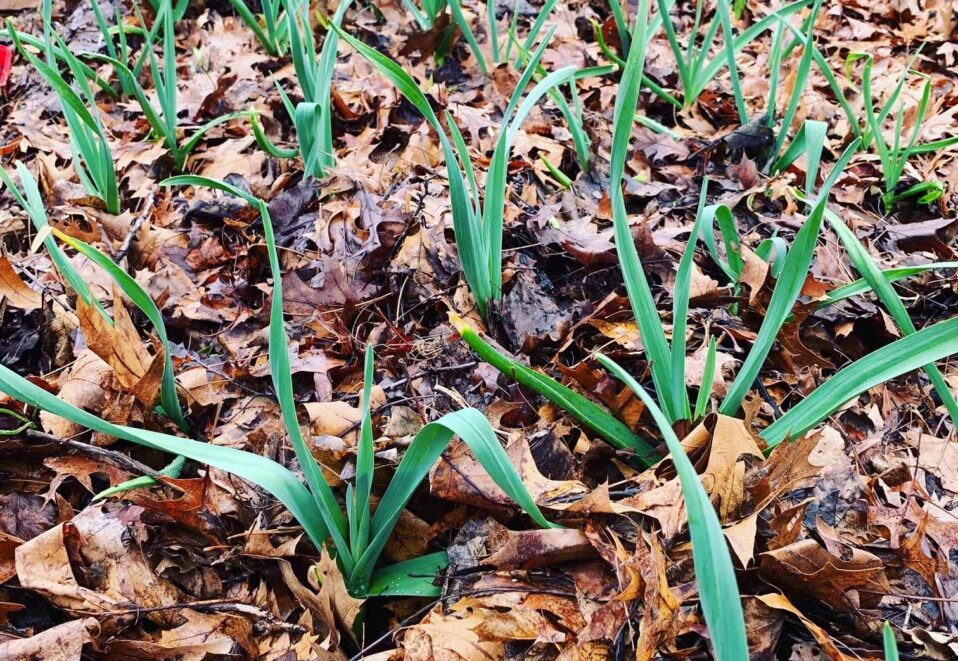
Top photo: Garlic shoots growing up through a deep layer of fall leaves. Above: Perennial Egyptian onions can be planted now, and will reward you throughout the next growing season.

Fall is the time to make big structural changes, to start new beds and resize old ones. It is also the time to plant bulbs: garlic, Egyptian onions, daffodils, and tulips are eager to go in the ground. You can even experiment and plant wildflowers and cilantro seeds in hidden places you will forget, only to be surprised when they emerge in the spring.

When it comes to alliums, Egyptian onions are a favorite. They provide year-round green onions for the kitchen, growing tender shoots in spring and fall, and create a formidable aromatic shield against deer and rodents. These perennial green onions emerge at the end of winter, before most plants have begun to grow, and provide protection to young neighboring plants from the very beginning of the new growing season.

As spring turns into summer, Egyptian onions bloom, and become a favorite stop for native pollinators, eventually blending in with the lush green in your garden. But, make no mistake, even in the background, these pungent guardians remain on active duty, creating a barrier that is imperceptible to humans, but so very disturbing to deer and rodents.  

Having planted your bulbs, autumn holds the key to unlock the fertility of your garden. This is the season when Master gardeners rush in with piles of manure, mineral amends, and mulch to replenish nutrients. They know that it is in the darkness of winter when cover crops, manures, and mineral amends are transformed into plant-ready nutrients by the soil food web. Your main job as a gardener is to protect this living web with a rich and thick layer of mulch, preferably in the form of fallen leaves that will slowly decompose and help remineralize your soil year after year. 

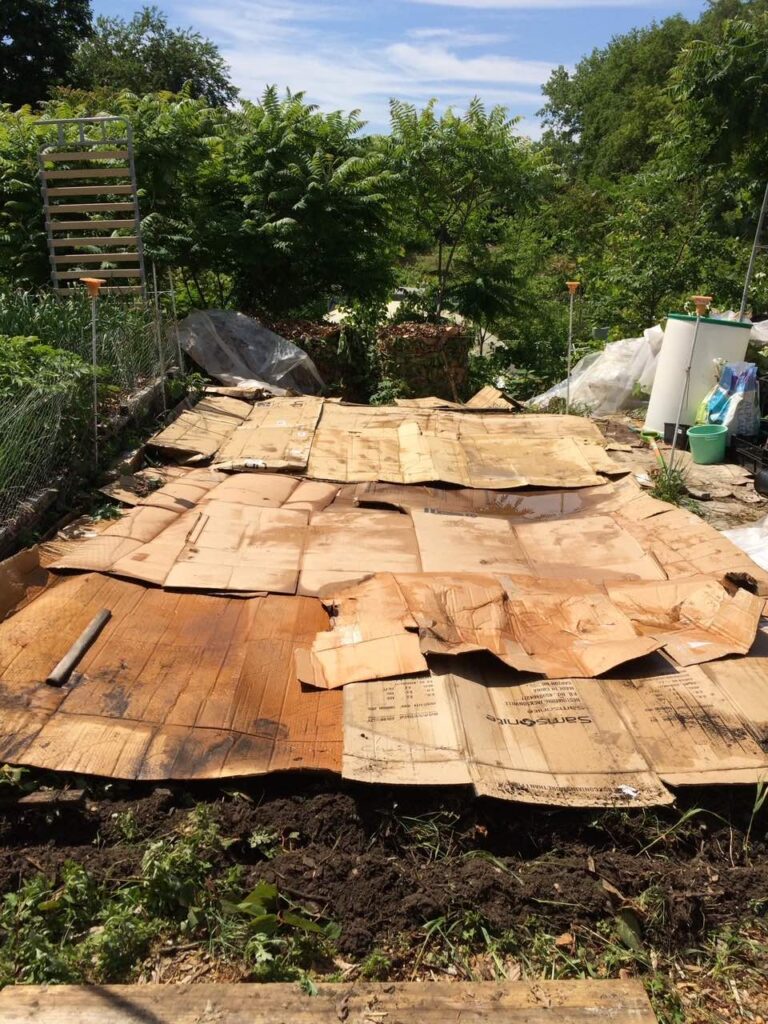
Covering your bed with cardboard and a deep layer of leaves on top is a great way to enrich your soil and suppress weeds.

If you had a hard time with weeds the previous season, fall is also the time to get ahead of them. Find plenty of plain cardboard—without glossy inks or colors, just the regular brown stuff. (Bike shops are a great place to find very large cardboard boxes that can cover an entire garden bed without interruption.) Remove tape or staples and place the cardboard on top of your beds or any area where you want to suppress weeds. Then, cover everything with a thick layer of leaves, as much as 9” deep, to protect and feed your soil ecosystem over winter. Rain and snow will soften the cardboard and compact the leaves on top, worms and arthropods will break through it, but young weeds will not—this applies to your bulbs too, so do not cover garlic or other new bulbs with cardboard. 

When spring comes, you can plant right into it; but do not remove or disturb this rich layer of cardboard and leaves beyond what is strictly necessary to plant your seedlings. This is a way to build good soil, and this is how you become a pro at creating a virtuous cycle of fertility that requires less work to grow stronger plants year over year. 

Be brave, take a leap, and this fall start your next growing season by building or rebuilding a strong foundation under your garden. 

–Francisco Cabas 


Francisco is a gardener at Galego Community Farm in Pawtucket. You can learn about vermiculture, natural pest control, overwintering crops, harvesting garlic, and much more from his gardening videos on Youtube @GardensofNewEngland


Read more

Youth staff get a taste of garlic farming

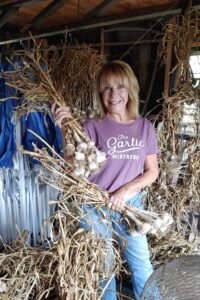
Sharon Damore grew 26 varieties of garlic this past year – more than 4,000 bulbs – at Urban Edge Farm.

Sharon Damore grew 26 varieties of garlic this past year – more than 4,000 bulbs – at Urban Edge Farm.

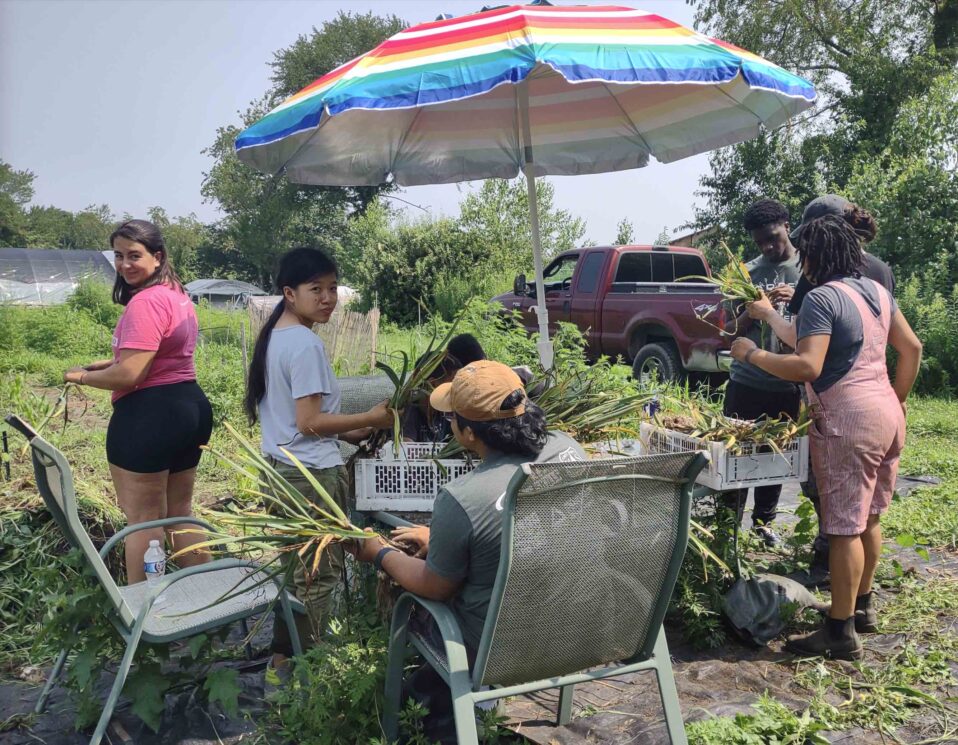
As part of their food system training, SCLT’s high school youth staff work alongside farmers growing at SCLT properties in Cranston and Hope, RI. There, they weed, harvest, and learn how these small business owners help supply their farmers market customers and food insecure Rhode Islanders through SCLT’s Produce Aggregation partners.

Read more

Farm-to-Market Center comes alive in July

Starting this month, local farmers resumed their weekly drop-offs of fresh produce at 404 Broad Street’s Farm-to-Market Center, where SCLT aggregation staff sort and store it briefly before it is delivered to clients throughout Greater Providence. Last year 23 farmers sold their produce through this program to six hunger relief agencies, as well as to our own VeggieRx produce prescription program. This much-needed nutritious food reached 1200 people and netted farmers close to $100,000.

Read more

Farmers add new flavors to beloved farmers market

With the outdoor farmers market season already underway, we wanted to share that one of the most successful markets in the state, the Hope Street Farmers Market (HSFM) in Providence, is bringing on six new farms for its 2023 season.Four are run by SCLT-network farmers growing at Urban Edge Farm in Cranston.

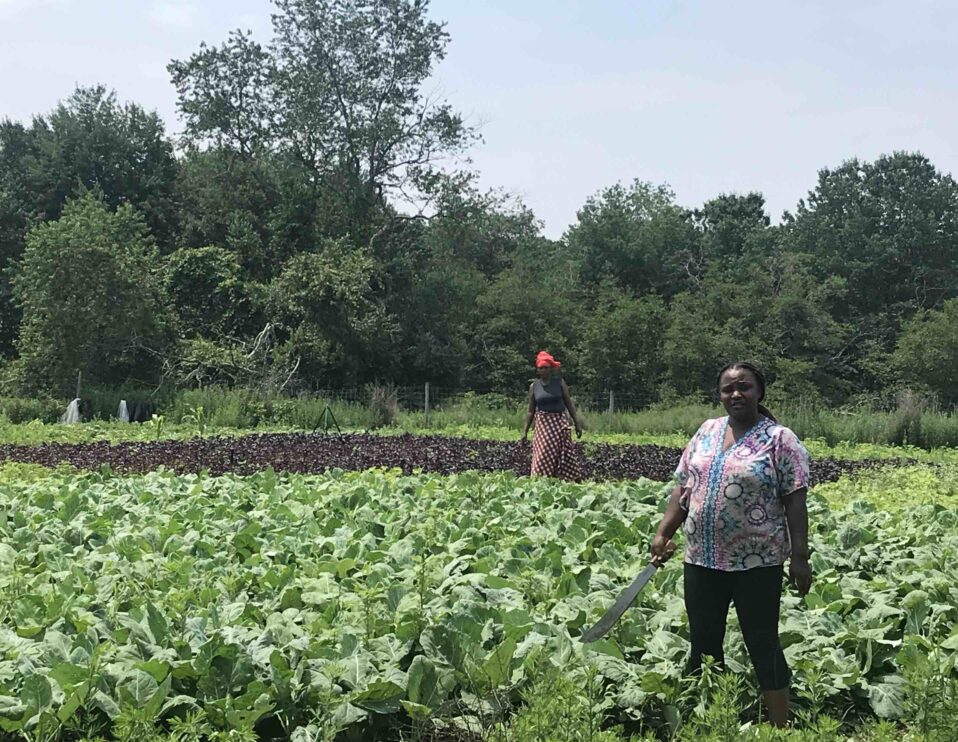
The new additions are Charlotte Uwimpuhwe (Charlotte’s Farm), Blia Moua and his wife Mai Lee (Wilson Community Farm), Chai Thao and her husband Leng Yang (Daily Farm), and Christina Dedora (Sanctuary Herbs). Each is eager to connect with new customers at this well-run, well-attended market and sell their produce, including amaranth, Thai peppers, butter ball and bitter melon, as well as more familiar vegetables, herbs and teas.

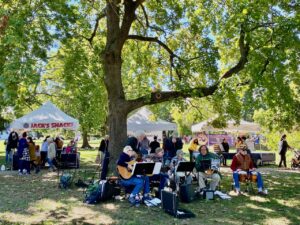
The HSFM was named one of the 10 best farmers markets in the country by USA Today in 2019, and regularly wins in the “Best of” category in RI Monthly’s annual competition. It draws large crowds (and dozens of friendly dogs) on Saturday mornings, and features live music, food trucks, and the Providence Artisans Market along Blackstone Boulevard. Its festival vibe can obscure that, for farmers, selling here can significantly affect their earnings.

Many people don’t realize that the 32-year-old HSFM was founded by an SCLT Board Member, Sandy Parsons. It began as the DownCity Farmers Market Cooperative with a handful of farmers in Kennedy Plaza before relocating to the grounds at Hope High School. It moved again, a couple of miles up the street to

Lippitt Park, in 2008. Despite the moves and the increase in participating farmers over the years, some changes were gradual.

Getting a spot at the HSFM hasn’t been easy because farmers tend to stay for years. But, attrition caused by the pandemic created several openings. SCLT staff urged farmers we work with to pursue this opportunity for them to grow their businesses and for the HSFM to better represent the BIPOC farmers in the state.

“In the early days, all the farmers at local markets were white,” said longtime SCLT volunteer and market-goer Elaine Cali. “The farmers from Asia, Africa, and the Caribbean have brought a richness by introducing customers to produce from their home countries. And, they love to talk to customers about how to prepare and enjoy them.”

While the juried market will have more farmers and vendors this season than ever (48), Market Manager Rui David describes the growth as “thoughtful, manageable, and sustainable.” The HSFM accepts only “farmers and food artisans” from Rhode Island, Connecticut, and Massachusetts. One of the criteria is that a participant’s “product will add to the overall diversity of the market without negatively impacting the financial success of current full-time vendors.” After applications are reviewed by a committee of current farmers and vendors they are voted on by all market association members in the spring.

The new farmers from Urban Edge Farm will join several others over the years with connections to SCLT. Besides City Farm, these include Pat’s Pastured, Zephyr Farm, and Greenleaf Farm. Stop by and ask any of them about their products. You may very well bring home something that adds fantastic new flavors to your next meal.

Learn more about the HSFM and check out their 2023 schedule at hopestreetmarket.com.

– Jenny Boone, Grants & Communications Manager

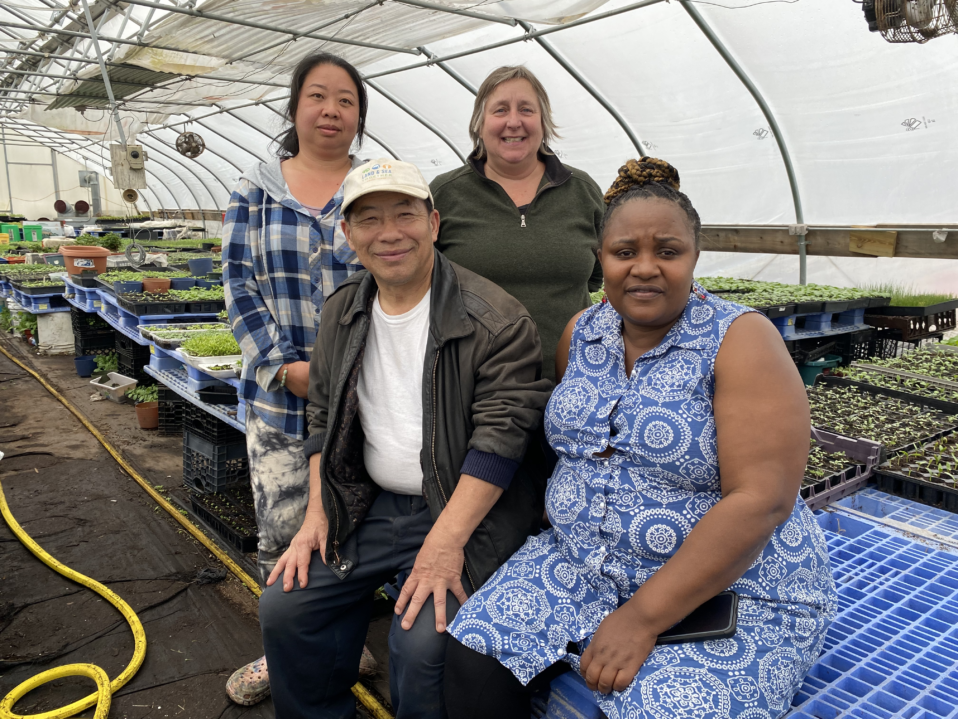
Caption above: Chai and Christina (standing), Blia and Charlotte, inside one of the greenhouses at Urban Edge Farm.

Read more

Record number of farmers win state-funded LASA grants

On Tues., Feb. 21, the RI Department of Environmental Management announced the winners of the Local Agriculture and Seafood Act grant program’s (LASA) 2022 funding cycle.

Read more

New headquarters wins historic preservation award

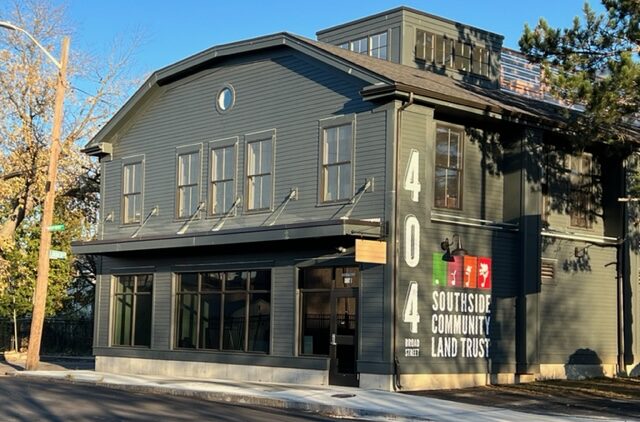
Unless you’ve lived in Providence for a long, long time, you probably wouldn’t know that our newly renovated building at 404 Broad Street started out as a livery, where neighbors stored their horses and carriages.

Read more

SCLT granted $100K from UNFI Foundation to address food inequity

By  Providence Business News
PROVIDENCE – The Southside Community Land Trust’s quest to get more food out to the community received a significant financial boost, courtesy of United Natural Foods Inc.
Read more

Local food builds health, community and sustainability

A robust Rhode Island food system would support environmental justice and help mitigate climate change. The current corporate-ruled system is collapsing under the weight of a changing climate, even as the barriers to food equality grow.

By Frank Carini, ecoRINews

Read more

SCLT’s New Headquarters to Invest in Healthy Food

By Caitlin Faulds, ecoRInews

PROVIDENCE — A multimillion-dollar loan recently granted to Southside Community Land Trust (SCLT) is set to improve the availability of healthy and affordable food in CentralFalls, Pawtucket, and South Providence for years to come, according to an SLCT spokesperson.

Read more

Saturday youth jobs now offered in Providence & Pawtucket

We’re adding on to our fall Youth Program this year! Young people between 14-24 are invited to apply for Saturday jobs located at SCLT urban farms in Providence and Pawtucket.

Read more