(401) 273-9419
sclt@southsideclt.org

Membership as Solidarity: Building Food Sovereignty Together

In a moment when federal funding for food systems work is under threat, when agricultural land values continue to rise, and when food insecurity remains a lived reality for thousands of Rhode Islanders, your support matters. SCLT membership is one direct way to invest in food sovereignty, and to get real, practical benefits for your own growing in the process.

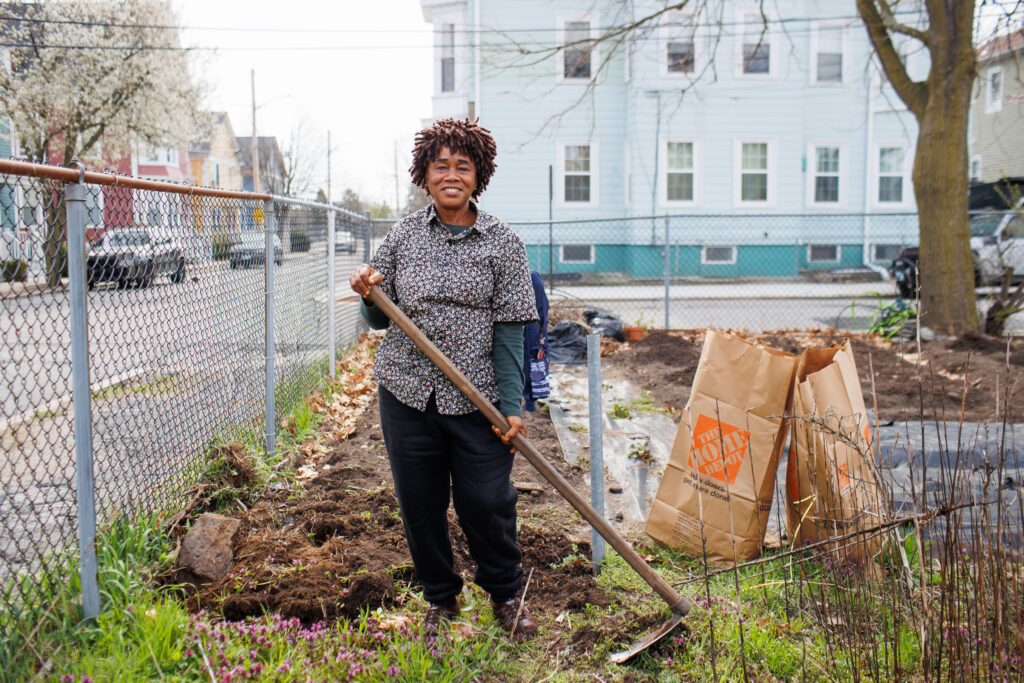
Membership with SCLT means you’re part of a community committed to building food sovereignty in Rhode Island. Your contribution supports everything we do: the community gardens we maintain across Providence and Pawtucket, the farmers we train and support at Urban Edge Farm and Good Earth Farm, the youth we employ in our Workforce Development Program, and the work we do connecting people to healthy, affordable food through VeggieRx and other food access initiatives. More than 75% of the farmers we support identify as Black, Indigenous, and people of color. Two-thirds of our community gardeners are women. These are the communities with the least access to land, capital, and infrastructure, and the most to offer. Your membership helps us invest in their leadership, their expertise, and their vision for what food sovereignty can look like.

But membership also gives you something back. You get 50 gallons of organic compost – valued at $110 – to make your garden lush and productive. You get first dibs on plants at our Rare & Unusual Plant Sale on May 16 & 17, when you can choose from over 300 varieties of veggie, herb, annual and perennial plants before the general public gets access. You’ll get a 10% discount on all your Plant Sale purchases. You’ll receive free organic and non-GMO seeds. And you’ll get discounts on other gardening resources like organic fertilizer. These aren’t token benefits; they’re real value for people who grow food.

If you don’t garden but still want to support us, you can opt out of receiving compost and direct the full amount of your membership contribution toward the organization’s work. You can also sponsor a membership to be gifted to a community member, or sponsor one of our programs directly. Every gift helps, and every membership sends a message: you believe in what we’re building.

Membership renewal for 2026 is open now. It’s easy: go online to www.southsideclt.org/join and sign up for a one-year or recurring membership. For any questions, email members@southsideclt.org.

This spring, as you plan your garden and think about where you want to put your resources, consider SCLT membership. You’ll be investing in farmers and gardeners across Rhode Island while investing in your own growing season. That’s what food justice looks like.

Read more

2025 Program Review: Finding Our Way Forward

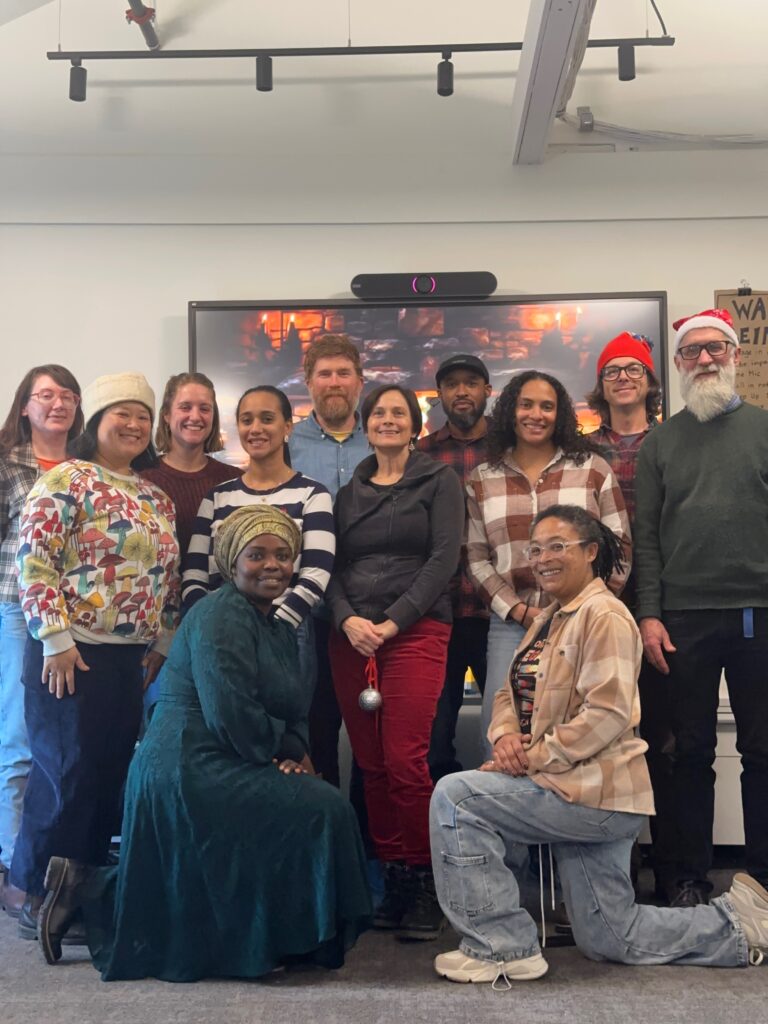
Every January, SCLT’s entire staff gathers for two days of reflection and conversation. Each program shares what they learned in the past year, guided by a set of questions that help frame the discussion: Who did you work closely with? What worked well? What challenged you? What data matters? Which partnerships strengthened, and which strained? What’s new and worth continuing? Where did you find moments of beauty, care, and joy? In February, we’ll gather again for one day to share our outlook for 2026.

2025 was marked by significant federal funding cuts that forced difficult staffing decisions. Our teams adapted, reorganized, and continued serving 25,000 Rhode Islanders through food access, community gardens, workforce development, and farmer support. The following reflects what emerged from these conversations.

Our Produce Aggregation Program generated $140,881 in farmer sales in 2025, with 13 farm businesses participating. This represents meaningful progress, even as we acknowledge falling short of our $160,000 goal for farmer payouts, a gap that reflects the reality of reduced operational capacity. A major blow came in March with the cancelation of the Local Food Purchase Assistance Cooperative Agreement, a USDA program, leaving us unable to offer farmers clear answers about market opportunities for months. Yet the program’s strength lies in its diversity. Our VeggieRx partnerships with Integra and Brown University Health distributed over 100 shares biweekly to people with diet-related health conditions. The partnership with Providence Parks now serves one recreation center with city council funding; we’re actively advocating for expansion to additional wards. And in a significant breakthrough, West African Superstore, owned and operated by Luna Walker at SCLT’s 404 Broad Street Healthy Food Hub, became the first community retailer in Rhode Island to participate in the Eat Well, Be Well incentive program. This program, the result of persistent collaboration between our Healthy Food Access Program Manager Kakeena Castro and the Department of Human Services, provides 50 cents in free produce for every dollar spent on fresh fruits and vegetables. This represents the kind of long-term relationship-building that moves the needle on food access for underserved communities.

Our Farmer Training & Support program navigated significant organizational transitions in 2025. Ben Torpey stepped into the new Program Director role while Dan Roberts focused more on in-field work, and the team adapted to reduced capacity while maintaining core services. The year revealed both what’s possible and what’s breaking. An “atmosphere of dread” marked the landscape as teams processed staff reductions and grappled with having to say no to project requests due to lack of funding. Yet critical partnerships, particularly with URI Extension, created continuity even as capacity shrank. We’re seeing increased enrollment in Conservation Stewardship Programs (CSP) among our growers, a positive indicator of farmer investment in their operations and land stewardship. The Hmong Farm team completed significant infrastructure improvements with new signage, a LASA-funded tractor, and a functional well and water system, providing farmers with better tools and resources. We also deepened our focus on farmer business support, helping farmers complete annual farm business registrations with RIDEM and conducting post-season interviews to understand needs and gather feedback.

With roughly 300 gardeners across our community gardens network, 2025 was a year of steady participation rather than expansion. Staff layoffs in the gardens program meant our Farmer Training & Support team stepped into additional leadership roles in the Gardens program. Rather than collapse, the result was adaptation: Chandelle Wilson and Ben Torpey launched monthly garden leader meetings to process the transition and maintain connection across our network. Of 23 total garden leaders, 18 attended the first November meeting, a meaningful showing of resilience in the face of real loss.

Our Workforce Development Program served young people across Providence and Pawtucket in 2025, working across the Youth Enterprise Farm, City Farm, and Galego Community Farm, located on the grounds of a housing development managed by Pawtucket Housing Authority. Despite reduced funding meaning fewer paid seats and fewer hours, we maintained a high retention rate among youth staff and deepened cross-cohort collaboration. The highlights speak to what happens when young people are given meaningful work and mentorship: four youth staff in Providence and two in Pawtucket graduated high school. Youth participated in field trips to Maisey’s Tree Farm, now in its third year of partnership, URI’s plant lab and animal farm, kayaking on the Blackstone River, and a Save the Bay boat trip to Prudence Island. Both program gardens were remarkably productive, yielding strawberries, watermelon, potatoes, carrots, and flowers funded through a Bloom RI grant. The cut flower garden at Galego became a community hub, directly encouraging residents to visit and engage with the space. We also launched important new trainings – First Aid/CPR certification and a Mental Health First Aid workshop – equipping young people with skills beyond agriculture.

One young person deserves particular mention: James Pastor Tzul, a former member of our youth staff, was recognized with an RIEEA Environmental Excellence Award. This recognition speaks to the leadership development happening on our farms and the real impact of the work young people do alongside our teams. Yet the year also revealed constraints. Reduced funding meant fewer opportunities for educational field trips and rural property visits. The partnerships that sustained us, particularly Groundwork Rhode Island in Pawtucket, now in its sixth year of collaboration, took time to build and continue to require intentional stewardship.

2025 revealed both SCLT’s capacity for adaptation and the toll of systemic disinvestment in food justice work. We did more with less because our farmers, gardeners, youth, and staff are deeply committed. But this is not sustainable, and we’re not pretending it is. The Cranston Food Hub construction beginning this week represents a necessary reinvestment in the infrastructure our farmers desperately need. The real story of 2025 is the people, the farmers who kept growing despite uncertainty, the youth who showed up week after week, the community gardeners who tended their plots, and the staff who pivoted and persisted through a genuinely difficult year.

The work continues, in our gardens, on our farms, in the relationships we’re building with each other and our community.

Read more

Construction Underway: SCLT’s Cranston Food Hub Takes Major Step Forward

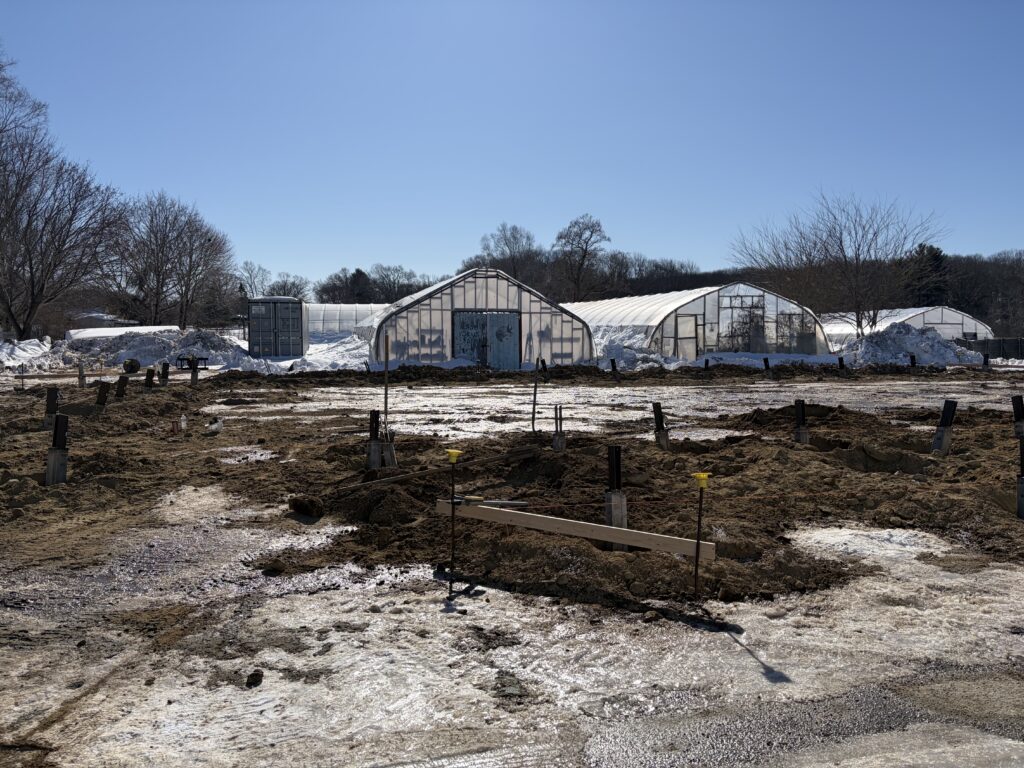
Construction of the Cranston Food Hub at Urban Edge Farm officially begins this week, marking a pivotal moment in SCLT’s effort to build a more equitable, resilient local food system. We’re creating a 4,000 square foot post-harvest handling, storage, processing, and distribution facility that will fundamentally change what regional farmers can accomplish. This is the moment when planning becomes concrete, literally.

Our Healthy Food Access Program has grown remarkably over the past few years, expanding from $49,000 in farmer revenues in 2021 to $160,000 in 2025. That explosive growth is a testament to the quality and demand for fresh, culturally familiar produce grown by our network of farmers. But it’s also created a problem: our Farm-to-Market Center and Healthy Food Hub in Providence has reached capacity. We’ve maxed out what we can process, store, and distribute from that single urban location.

The underlying challenge is deeper than just needing more space. Rhode Island has the highest agricultural real estate values in the US at $24,059 per acre, six times the national average. This makes it nearly impossible for beginning and historically marginalized farmers to acquire land and build the infrastructure necessary for successful farm businesses. On our managed lands at Urban Edge Farm and Good Earth Farm, more than 75% of farmers identify as Black, Indigenous, and people of color; 66% are women; and 50% live in South Providence. Many are immigrants and refugees from Southeast Asia, Africa, and the Dominican Republic who bring tremendous agricultural knowledge but face systemic barriers to accessing land, markets, and infrastructure.

The Cranston Food Hub directly addresses these barriers. By providing modern aggregation, storage, and distribution infrastructure at cost – infrastructure these farmers could never afford individually – we’re enabling them to increase production, improve product quality, and access higher-value markets. This isn’t just about moving more vegetables. It’s about enabling farmers to build sustainable businesses and claim economic power in a system designed to exclude them.

Construction begins this week. The new facility, funded primarily through a USDA Resilient Food Systems Infrastructure grant, will include modern pack lines for washing and processing, three walk-in humidity-controlled coolers, and a walk-in freezer. Equally critical, the facility will connect to municipal water and sewer systems, replacing an aging well system and failed septic infrastructure that has posed safety and operational challenges for years. For the farmers working this land, this means clean water access, food safety compliance, and a professional-grade workspace that honors the quality of their work.

This winter, SCLT received a significant boost to this project: a grant award from the Growing Justice Fund, a national funder that supports food justice work led by organizations centered on racial equity. This grant will support the buildout of the Cranston Food Hub, deepening our capacity to serve farmers. The Growing Justice Fund places us within a network of organizations doing similar work across the country, all operating from the conviction that food justice requires centering the voices, leadership, and ownership of the communities most impacted by food system inequities.

Construction will be completed by summer 2026, with full facility operations commencing by late this year. The timeline includes steel structure completion by April, foundation and utility work in May-June, interior buildout over the summer, and equipment installation in the fall. In the months ahead, we’ll work closely with our farmers to ensure the transition is smooth, offering training on new equipment and best management practices so they can maximize the potential of this facility.

The hub will be cooperatively managed with external partners to maximize utilization and support the broader farming community. Farm Fresh Rhode Island’s Hope’s Harvest program will glean, process, and aggregate surplus produce for redistribution through emergency food systems. Hope & Main’s Nourish our Neighbors program will source from SCLT growers. The facility will directly benefit approximately 50 local and regional agricultural producers, including the 18 farm businesses at Urban Edge Farm, 6 at Good Earth Farm, 30+ farmers from the Hmong United Association of Rhode Island land access project, and external partner farms across the region.

This facility represents an investment in the middle of our food supply chain, the infrastructure gap that has constrained what’s possible for small, historically excluded farmers. As we break ground this week and move toward spring completion, we’re reminded that this work is essential, this work is possible, and this work has ripple effects far beyond Rhode Island. We’re grateful for the farmers, partners, funders, and community members who made this moment possible.

Read more

Welcoming Our New Board Members: Building Community Leadership


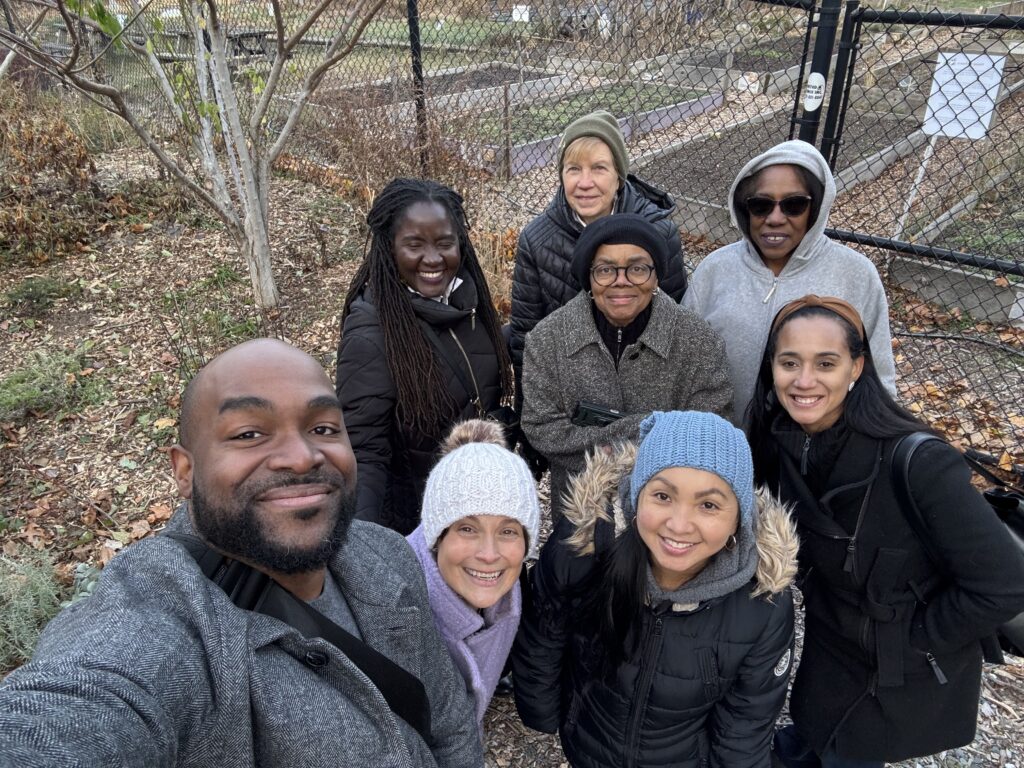
SCLT is honored to welcome three remarkable leaders to our Board of Directors: Mariama Kurbally, Shane Lee, and Sherri Gibbs. Each brings deep expertise, authentic commitment to community, and a vision aligned with our mission of food sovereignty and equitable access to land and resources.

Mariama Kurbally brings two decades of institutional transformation experience to our board. As Chief Executive and Program Officer of E2 EMPOWERED, a strategy consulting firm with offices in Dallas and Providence, Mariama specializes in helping organizations operationalize systemic change. Her background spans school and state-level impact work, where she’s coached executives through equity-centered redesigns that center historically marginalized and disinvested communities, exactly the communities SCLT serves.

A first-generation graduate of Rhode Island College and the University of Michigan, Mariama holds a master’s degree in Educational Leadership. She’s trained teams across fifteen states as a strategy consultant and served as an international trainer in equity-centered and liberatory design practices. Her particular skills in strategic communication and data analysis for systemic transformation will strengthen SCLT’s ability to scale impact and communicate our work authentically. As a Black immigrant woman, she brings lived experience to our commitment to centering equity in every aspect of our organization.

Shane Lee is the director of training and special projects at the Nonviolence Institute, and he embodies the transformative power of homegrown leadership. Born and raised in Providence, Shane understands firsthand the challenges our neighbors face – poverty, violence, and limited access to opportunity. His Level 3 certification in Kingian Nonviolence, earned through training with legendary civil rights activist Rev. Dr. Bernard Lafayette Jr., grounds his approach to community change in principles of dignity and collective liberation.

Shane’s career reflects his commitment to building community power through multiple pathways. He’s trained non-profit, medical, law enforcement, education, and corporate audiences both nationally and internationally, working to help community members recognize how they can use what they have, through art, education, and economic development, to create better futures. A reverend, devoted father of five, singer-songwriter, and current board member of The Avenue Concept (a public arts organization in Providence), Shane embodies the integrated approach to community transformation that SCLT champions. His belief that sustainable change is possible even in the most challenging times mirrors our own vision.

Sherri Gibbs brings four decades of experience as an educator, community leader, and wellness practitioner. For nearly two decades, she served as an educational leader with the East Providence School Department, overseeing all aspects of elementary school operations. Before that, she began her teaching career in 1982 as a special education teacher in New Bedford, and later spent eight years providing educational services to inmates at Bristol County Correctional Facility. This is work that reflects her commitment to meeting people where they are and creating pathways forward.

Beyond formal education, Sherri’s community involvement has been extensive and consequential. She coordinated NAACP Youth Councils in New Bedford from 1983 to 1990, organizing educational trips and cultural experiences for high school students. She remains an active member of the NAACP Providence Branch and the National Association of Professional Women. Since 2015, she has operated Creating Community Awareness of Spirit & Energy (CCASE), a holistic healing practice rooted in Reiki and wellness that supports clients’ physical, emotional, and spiritual well-being. Currently, she works as a Human Resources Consultant for S&S Trucking, and from 2022 to 2024 served as Program Coordinator at the Multicultural Invocation Center, working with high school students on career development and financial literacy.

These three leaders arrive at our board during a pivotal moment. As SCLT navigates significant funding challenges and works to deepen our impact with 25,000+ Rhode Islanders annually, Mariama’s expertise in systems transformation, Shane’s deep community roots and commitment to economic justice, and Sherri’s dedication to education and whole-person wellness will be invaluable. Together with our existing board and staff, they represent the values of authenticity, equity, and community-led change that define our work.

We’re excited to have them join us as we build a food system that nourishes our community and honors the dignity of every person we serve. Welcome, Mariama, Shane, and Sherri!

Read more