
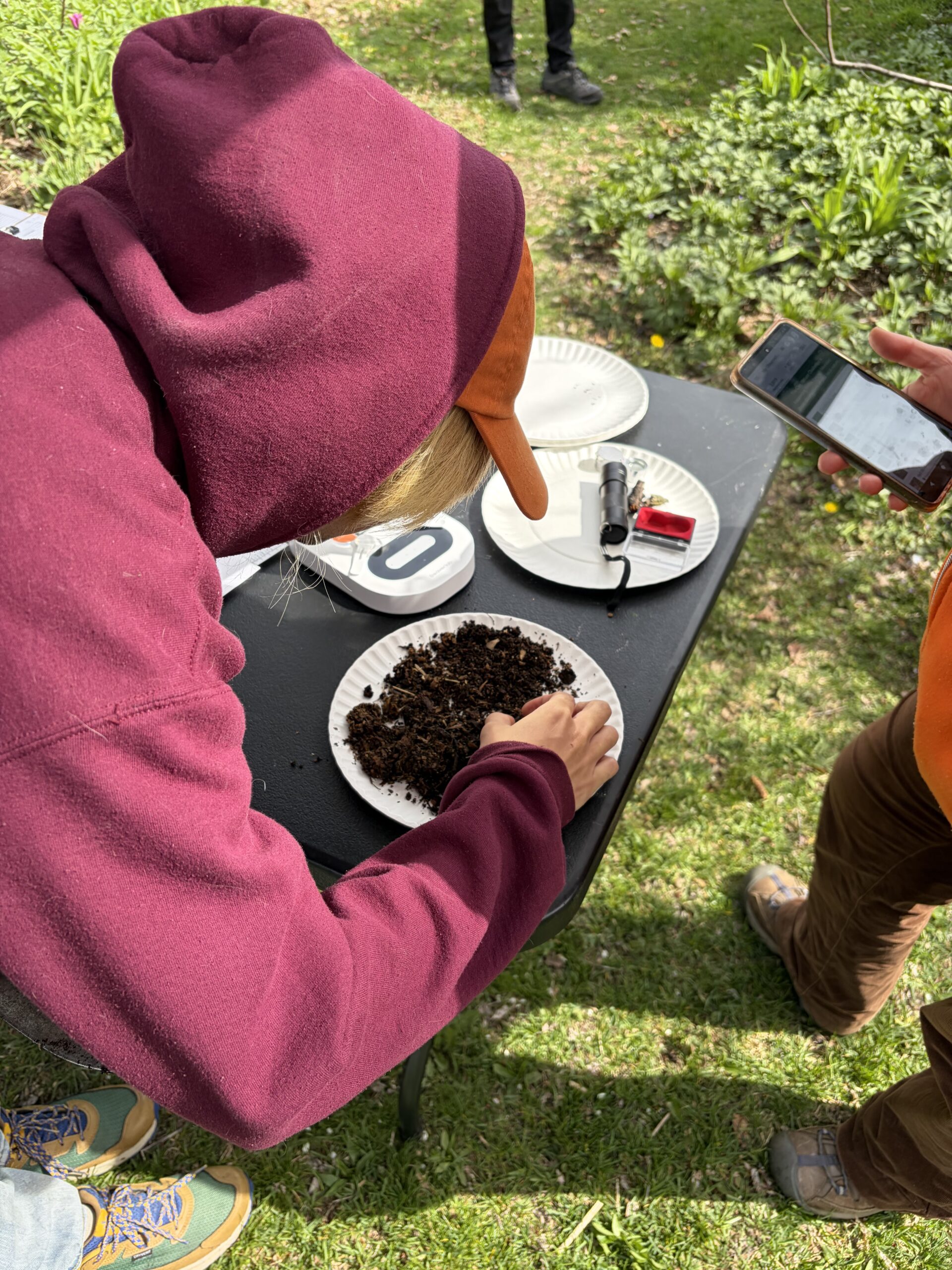
A citizen scientist examines soil while their partner records their findings at a BioBlitz at City Farm, 2026
What lives in an urban garden? More than most people expect. Since 2025, SCLT has partnered with 15 Minute Field Trips and the Rhode Island Natural History Survey on a rolling BioBlitz series, spending mornings at SCLT gardens with community scientists documenting every plant, animal, and fungus they can find. The project is planned to run for ten years, visiting a different garden in the SCLT network each year to create a big picture view of what shares our natural spaces.
The first year brought the series to Peace & Plenty Community Garden on Peace Street in Providence, where five sessions across 2025 and 2026 turned up 405 distinct species across the garden’s 0.39 acres. Among the more striking finds: a species of bee, the Pugnacious Leafcutter Bee, previously unrecorded in Rhode Island. Two Robberfly species new to the site were discovered, along with two species of Woolcarder Bee and a rare sighting of the Golden Northern Bumblebee on blossoming sweet peas. The fifth and final Peace & Plenty session in June drew 26 participants, including gardeners, neighbors, and family members, who together logged 205 verified species in a single morning. A teenager who had never been to a BioBlitz before identified a beetle species that had not been recorded previously at the garden.
This season, the series has moved to City Farm, SCLT’s urban production and demonstration farm at 168 West Clifford Street in Providence. The first session in April turned up 223 living things across seven categories. The July session added roughly that many more. One final session remains: October 4, from 11am to 2pm, open to all ages and experience levels. Register at bit.ly/CFBioblitz.
The findings from every session are logged on iNaturalist and contribute to the Rhode Island Natural History Survey’s statewide biodiversity database, building a growing picture of what urban green spaces actually support. The answer, it turns out, is a lot.